
Reims and Épernay in two days: the cathedral, the cellars and the avenue de Champagne
In Reims you should see Notre-Dame cathedral, where the kings of France were crowned, and the chalk cellars of the Champagne houses on Saint-Nicaise hill; in Épernay, the avenue de Champagne, beneath which around 200 million bottles lie in more than 110 km of cellars. The two towns are 30 km apart, and the TGV from Paris to Reims takes about 45 minutes, so two days are enough to get to know the heart of Champagne. Below is a plan for each day and some practical advice.

Reims (pronounced rans) and Épernay (pronounced ay-pair-NAY) are the two poles of Champagne. Reims is a large city with a cathedral and big houses whose wines age in former chalk quarries. Épernay is small, set among the vineyards, and its main street is one long showcase of Champagne houses. We write about the region as a whole in our guide Champagne: the region, its villages and vineyards, and the bottles from the houses you will visit here are in ranking of the best Champagnes.
How do I get to Reims and Épernay?
The simplest way is by train from the Gare de l'Est in Paris: the TGV to Reims takes about 45 minutes, and the direct train to Épernay about 1 hr 20 min.
According to the Épernay tourist office, the drive from Paris takes about an hour and a half to Reims and about 1 hr 45 min to Épernay. Reims and Épernay are 30 km apart; the regional train covers the distance in about 30 minutes. The stations in both towns are close to the centre, so you can reach most of the places described below on foot. You will only need a car on the second day, for the wine villages.
Reims: what to see on day one
On the first day, see Notre-Dame cathedral, and in the afternoon go down into the chalk cellars on Saint-Nicaise hill (pronounced san nee-kez).
Notre-Dame Cathedral
The 13th-century cathedral is one of the most important Gothic buildings in Europe. For centuries the kings of France were crowned in Reims, a tradition going back to the baptism of Clovis, King of the Franks, at the end of the 5th century. The most famous coronation took place on 17 July 1429: Charles VII received the crown here in the presence of Joan of Arc, who had brought him to Reims during the war with the English. According to the French tourism website France.fr, the cathedral has 2,303 statues, more than any other in the world, the best known being the “Smiling Angel”. You can also climb the towers and the upper parts of the cathedral, from where you can see the whole city.
Since 1991 the cathedral has been a UNESCO World Heritage Site, together with the former Abbey of Saint-Remi and the Palace of Tau. For lunch, head to the Boulingrin covered market, built in 1929, where you will find local producers.
Saint-Nicaise hill and the chalk cellars
On Saint-Nicaise hill the wines of the Champagne houses age in former chalk quarries known as crayères (pronounced kray-air). In 2015 the hill and its cellars were added to the UNESCO list as part of the “Coteaux, Maisons et Caves de Champagne” site.
- Ruinart (pronounced rwee-NAR), 4 rue des Crayères. The oldest Champagne house, founded in 1729. Its cellars have been a listed monument since 1931; visitors go as deep as 40 m underground.
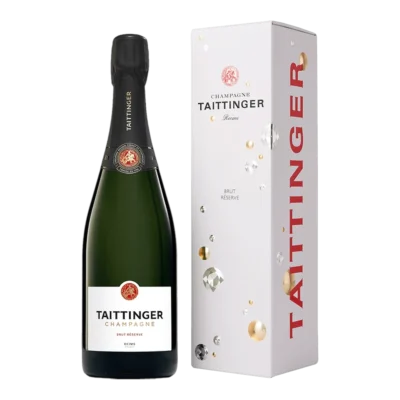
- Taittinger (pronounced tet-an-zhay). Cellars beneath the former Abbey of Saint-Nicaise, carved out of 4th-century chalk quarries. The house has 288 ha of vineyards, one of the largest estates in Champagne.
- Veuve Clicquot (pronounced vuhv klee-KOH), 1 rue Albert Thomas. A house founded in 1772. Madame Clicquot (pronounced klee-KOH) made the first known vintage Champagne in 1810 and invented the riddling table (pronounced reh-moo-ahzh), used for turning the bottles, which other houses later adopted. The house has used its yellow label since 1876, and registered it as a trademark a year later.
Away from the hill, tours are also offered by Mumm (pronounced moom) at 34 rue du Champ de Mars and Lanson (pronounced lahn-son) at 66 rue de Courlancy, whose tour takes you from the vineyard to the glass. Also based in Reims are Krug i Louis Roederer (pronounced lwee ROH-duh-rer).


Épernay: what to see on day two
On the second day, walk along the avenue de Champagne (pronounced a-vuh-NEW duh shahm-PAN-yuh), go down into the cellars of one of the houses and drive to Hautvillers (pronounced oh-vee-LAIR), Dom Pérignon's village.
Avenue de Champagne
The street is about 1.5 km long and lined with mansions and town houses that serve as the headquarters of Champagne houses. According to the Épernay tourist office, more than 110 km of cellars carved into the chalk run beneath it, holding around 200 million bottles. Some of the passages are 9-18 km long, lie 20-40 m underground and date from the 18th century. The street has had its present name since 1925, and since 2015 it has been on the UNESCO list together with Fort Chabrol, a centre set up to fight phylloxera, a vine pest.
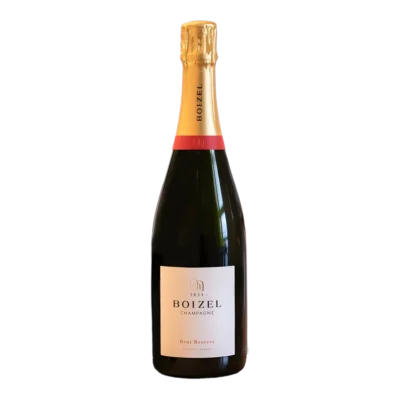
The largest house on the avenue is Moët & Chandon (pronounced mo-et ay shon-don) at number 18: its cellars are 28 km long and on three levels, 10-30 m underground. At number 46 stands the family house Boizel (pronounced bwah-zel), and also based on or near the avenue are Pol Roger (pronounced pol ro-zhay), Mercier (pronounced mair-SYAY) and De Castellane. Épernay is also home to Perrier-Jouët (pronounced per-yay zhoo-et) i Leclerc Briant (pronounced leh-clair bree-on), a fully organic and biodynamic house.

At number 13, in a historic small château, is the museum of Champagne wine and regional archaeology. If you want to see the town from above, you can climb the De Castellane tower: it is 66 m high with 237 steps. In December the avenue de Champagne is lit up by the Habits de Lumière festival, and the houses show off their courtyards and illuminated façades.
Hautvillers and Aÿ
A few minutes' drive from Épernay lies Hautvillers, a village on a slope above the Marne. In its Abbey of Saint-Pierre the Benedictine monk Pierre Pérignon was cellarer from 1668 until his death in 1715; he is buried in the abbey church. Since 1823 the abbey has belonged to Moët & Chandon, and the monk's name is borne by Dom Pérignon (pronounced dom peh-reen-yon). Contrary to legend, the monk did not invent the bubbles, but he made his mark through careful vineyard work and by blending grapes from different plots.
Nearby lies Aÿ (pronounced ah-EE), a grand cru village (pronounced grahn KREW) and the headquarters of Bollinger (pronounced bol-an-zhay) i Deutz (pronounced duhts), and nearby Mareuil-sur-Aÿ (pronounced ma-RUH-ee sewr ah-EE) with the house Billecart-Salmon (pronounced beel-kar sal-mon). The vineyards on the slopes of Hautvillers, Aÿ and Mareuil-sur-Aÿ form the third part of the UNESCO listing.
A two-day plan
| Time | Day 1: Reims | Day 2: Épernay and around |
|---|---|---|
| Morning | Notre-Dame cathedral, climbing the towers, the Palace of Tau | Train to Épernay (about 30 minutes), a walk along the avenue de Champagne |
| Midday | Lunch at the Boulingrin market | A cellar tour at one of the houses on the avenue, lunch in Épernay |
| Afternoon | Saint-Nicaise hill: the cellars of Ruinart, Taittinger or Veuve Clicquot (booking required) | Hautvillers and the abbey, the viewpoint over the Marne Valley, Aÿ |
| Evening | The Basilica of Saint-Remi, dinner in the centre | Return to Reims or to Paris |
The Épernay tourist office says that both towns can be seen even in a single day from Paris, but then there is little time for each place. If you have three days, you can add the Côte des Blancs (pronounced koht day BLAHN), the heartland of Chardonnay: one of the Champagne trail routes leads there straight from the avenue de Champagne. The Comité Champagne also points out that the fourth Friday of October is Champagne Day, celebrated in the region and around the world.
Practical tips
- Book visits to the houses in advance; places run out in high season.
- Bring a warm layer: the chalk cellars are cool all year round.
- For the wine villages you need a car or an organised tour; between Reims and Épernay the train is more convenient.
- If you would rather not carry bottles home, you can buy the wines of many of these houses in Poland; you will find the list on the page Champagne houses.


