

Guide
Everything worth knowing about Champagne
How to choose it, read the label, serve it and not overpay. No jargon, with figures and sources.
Where to start
Six articles after which you will choose, serve and open Champagne without guesswork.
 Champagne and other sparkling winesReal Champagne: how to recognise it by its labelReal Champagne is a sparkling wine from the French Champagne appellation: made from grapes grown in Champagne, with a second fermentation in the bottle and at least 15 months of ageing in the cellar.…
 Champagne and other sparkling winesProsecco vs Champagne: how they differ and when to choose whichProsecco is not Champagne. It is a sparkling wine from north-eastern Italy, made mainly from the Glera grape; it gets its bubbles in a steel tank. Champagne comes only from the Champagne region of France,…
 Label glossaryBrut, Extra Dry, Demi-Sec: how much sugar is in ChampagneBrut on a Champagne label means there are less than 12 grams of sugar per litre of wine, i.e. the Champagne is dry. It is one of seven terms that…
 How to serveHow to chill Champagne quickly and at what temperature to serve itThe fastest way to chill Champagne is a bucket filled half with water and half with ice: after 20-30 minutes the bottle is at 8-10 °C, the temperature at which Champagne tastes best. In…
 How to serveHow to open Champagne: quietly, safely or with a sabreTo open Champagne safely, hold the cork firmly in your hand and slowly turn the bottle, not the cork, until the gas escapes with a quiet hiss. The bottle should be chilled to 8-10 °C…
 How to serveDoes Champagne have an expiry date? How long an unopened bottle lasts and how to store itChampagne has no expiry date, because European Union rules exempt sparkling wines and drinks of at least 10% alcohol from it. It does not spoil like food,…
Right now
 OccasionsWhich Champagne to give as a gift: a bottle for every budget and occasionThe best gift is a Champagne whose style suits the recipient and whose packaging suits the occasion: a classic Brut from a great house for someone you don't know well, a vintage…
 OccasionsChampagne for a birthday: for an 18th, a 30th and every otherFor a birthday, the best choice is a Champagne that says something about the person celebrating: for a milestone birthday, a bottle from their birth year, for an ordinary birthday, a classic Brut in a birthday box,…
 How to serveWhat to serve with Champagne, or why strawberries are not the best ideaBrut Champagne is best served with salty snacks, seafood, sushi, fish and poultry, because its acidity and bubbles refresh the palate after rich food. With sweet desserts,…
Rankings
All rankings Ranking · October 2026Popular Champagne gifts: 10 brands everyone will recognise (October 2026)
 Ranking · October 2026Magnums and larger bottles of Champagne: 2026 ranking from 1.5 to 15 litres (October 2026)
 Ranking · October 2026Champagnes rated highest by critics: ranking (October 2026)
 Ranking · October 2026Champagne over 800 zł: vintages, prestige cuvées and single vineyards (October 2026)
Latest
 OccasionsChampagne for New Year's Eve: what to buy, how many bottles and how to serve it at midnightFor New Year's Eve, the best buy is a real Champagne in the Brut style, dry and fresh, which goes with snacks, and a magnum for a larger party. From a 0.75 l bottle you can pour…
 OccasionsChampagne for Christmas: with Christmas Eve fish, the festive roast and cakesFor Christmas it is best to have two Champagnes: a dry Brut for the Christmas Eve fish and festive dishes, and a sweeter Demi-Sec for cakes. The Comité Champagne recommends non-vintage Brut for…
 Champagne and other sparkling winesChampagne from Biedronka and Lidl: how to check whether it is real ChampagneChampagne from Biedronka or Lidl is real Champagne if the label says “Champagne”: the wine then comes from the French appellation and is subject to the same rules…
Champagne and other sparkling wines
Prosecco, cava, crémant, Dorato and discount-store bottles: how they differ from Champagne and how to check.
Champagne and other sparkling winesChampagne from Biedronka and Lidl: how to check whether it is real ChampagneChampagne from Biedronka or Lidl is real Champagne if the label says “Champagne”: the wine then comes from the French appellation and is subject to the same rules… Champagne and other sparkling winesCan you buy Champagne for 100 zł?For 100 zł you can buy real Champagne, but only in a small 0.2 l bottle, for two glasses. A 0.75 l bottle in our shop costs from just under 200…
 Champagne and other sparkling winesNon-alcoholic Champagne: does it exist and what to serve insteadNon-alcoholic Champagne does not exist. Wine from the Champagne appellation usually has about 12% alcohol, and European Union law does not allow alcohol to be completely removed from wine with a protected…
 Champagne and other sparkling winesFranciacorta: an Italian sparkling wine made like ChampagneFranciacorta is an Italian sparkling wine from Lombardy, from around Lake Iseo in the province of Brescia, made by the same method as Champagne: with the second fermentation in the bottle. It is made…
 Champagne and other sparkling winesNot everything that pops is Champagne: Dorato, Piccolo, Igristoye and AstiDorato, Piccolo, Igristoye and Asti are not Champagne. Dorato is a brand of sparkling wine produced in Poland, Piccolo is a non-alcoholic drink for children, the Russian word “igristoye” means…
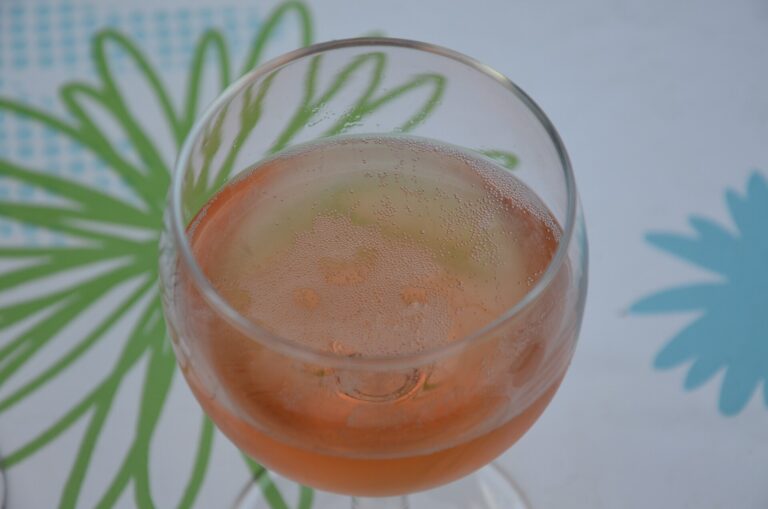 Champagne and other sparkling winesCrémant or Champagne: what you pay extra forCrémant is a sparkling wine with the second fermentation in the bottle, made in France outside Champagne, including Alsace, Burgundy and the Loire Valley, as well as in Luxembourg. The method…
 Champagne and other sparkling winesCava or Champagne: the same method, a different resultCava is not Champagne, although it is made by the same method: the second fermentation takes place in the bottle and the wine matures on its lees. It comes from Spain, mainly from Catalonia,…Champagne and other sparkling winesProsecco vs Champagne: how they differ and when to choose whichProsecco is not Champagne. It is a sparkling wine from north-eastern Italy, made mainly from the Glera grape; it gets its bubbles in a steel tank. Champagne comes only from the Champagne region of France,…Champagne and other sparkling winesReal Champagne: how to recognise it by its labelReal Champagne is a sparkling wine from the French Champagne appellation: made from grapes grown in Champagne, with a second fermentation in the bottle and at least 15 months of ageing in the cellar.…
How to serve
Chilling, glasses, opening, storage and food with Champagne.
 How to serveWhy does Champagne go to your head faster? What the research saysChampagne can go to your head faster because carbon dioxide speeds up the absorption of alcohol: in a British study from 2003, the same Champagne with bubbles produced a higher concentration…How to serveHow to open Champagne: quietly, safely or with a sabreTo open Champagne safely, hold the cork firmly in your hand and slowly turn the bottle, not the cork, until the gas escapes with a quiet hiss. The bottle should be chilled to 8-10 °C…
 How to serve“Kieliszek szampana” or “szampanu”? The declension of a word that behaves as if it were aliveThe correct Polish form is “kieliszek szampana”, not “szampanu”: dictionaries record only the genitive form ending in -a. In the accusative, both “wypić szampana” and “wypić szampan” are allowed, because…
 How to serveHow strong is Champagne and how much alcohol is in a bottleChampagne usually has 12-12.5% alcohol, roughly the same as white wine. A 100 ml glass is about one standard drink (10 g of pure alcohol), and a whole…How to serveDoes Champagne have an expiry date? How long an unopened bottle lasts and how to store itChampagne has no expiry date, because European Union rules exempt sparkling wines and drinks of at least 10% alcohol from it. It does not spoil like food,…
 How to serveOpen Champagne: how long it lasts and whether a spoon in the neck helpsOpened Champagne closed with a sparkling wine stopper and kept in the fridge will keep its bubbles for a day or two, then loses them quickly. A teaspoon in the neck of the bottle does not help:…How to serveHow to chill Champagne quickly and at what temperature to serve itThe fastest way to chill Champagne is a bucket filled half with water and half with ice: after 20-30 minutes the bottle is at 8-10 °C, the temperature at which Champagne tastes best. In…
 How to serveHow many calories are in a glass of Champagne and why Brut has fewerA glass of Brut Champagne (125 ml, 12% alcohol) has about 83-89 kcal, and a whole 0.75 l bottle about 500-535 kcal. Over 90% of those calories come from alcohol, and…How to serveWhat to serve with Champagne, or why strawberries are not the best ideaBrut Champagne is best served with salty snacks, seafood, sushi, fish and poultry, because its acidity and bubbles refresh the palate after rich food. With sweet desserts,…
 How to serveHow much Champagne for a wedding: bottles per number of guestsFor a wedding you need as many bottles of Champagne as a simple formula gives: the number of guests who drink multiplied by the number of glasses per person, divided by 6, because a 0.75…
 How to serveThe Champagne glass: flute, tulip or coupeThe best Champagne glass is a tall tulip with a bowl that narrows towards the top, because it gathers the aroma of the wine and does not let the bubbles escape too quickly. A flute works for…
 How to serveHow Champagne is made: from harvest to cork, step by stepChampagne is made from wine that goes through a second fermentation in a closed bottle: the yeast eats the added sugar, and the carbon dioxide stays in the wine as bubbles. From the hand harvest…
Occasions
Gifts, weddings, birthdays, anniversaries, Christmas and New Year's Eve: what to buy and how many bottles.
OccasionsChampagne for New Year's Eve: what to buy, how many bottles and how to serve it at midnightFor New Year's Eve, the best buy is a real Champagne in the Brut style, dry and fresh, which goes with snacks, and a magnum for a larger party. From a 0.75 l bottle you can pour…OccasionsChampagne for Christmas: with Christmas Eve fish, the festive roast and cakesFor Christmas it is best to have two Champagnes: a dry Brut for the Christmas Eve fish and festive dishes, and a sweeter Demi-Sec for cakes. The Comité Champagne recommends non-vintage Brut for… OccasionsChampagne for weddings and anniversaries: a vintage bottle and engravingThe best Champagne for a wedding is a bottle the couple will open on a day that matters to them, and for an anniversary, Champagne from the year of the wedding. Vintage Champagne matures in the cellar…OccasionsChampagne for a birthday: for an 18th, a 30th and every otherFor a birthday, the best choice is a Champagne that says something about the person celebrating: for a milestone birthday, a bottle from their birth year, for an ordinary birthday, a classic Brut in a birthday box,…OccasionsWhich Champagne to give as a gift: a bottle for every budget and occasionThe best gift is a Champagne whose style suits the recipient and whose packaging suits the occasion: a classic Brut from a great house for someone you don't know well, a vintage…
 OccasionsWhich Champagne for a wedding: for the toast, for the table and for the bride and groomFor the wedding toast, a dry non-vintage Brut works best, bought at one bottle per six guests, and for the bride and groom a magnum or a bottle from…
Houses and brands
Moët, Dom Pérignon, Veuve Clicquot, Cristal and the world's most expensive Champagnes.
 Houses and brandsThe most expensive Champagne: what Krug Clos d'Ambonnay, Dom Pérignon and Armand de Brignac costThe most expensive single bottle of Champagne sold at auction is said to be a 19th-century bottle of Veuve Clicquot recovered from the bottom of the Baltic, for which 30,000 euros was paid in 2011.…
 Houses and brandsCristal: the Tsar's Champagne, a clear bottle and a dispute with Jay-ZCristal is the most famous wine of the Louis Roederer house in Reims: the house created it in 1876 for Tsar Alexander II and from the start served it in a clear bottle…
 Houses and brandsVeuve Clicquot: Yellow Label, Rosé, Rich and La Grande Dame. Which to choose?To start with, the best choice is Veuve Clicquot Brut with the yellow label, a dry non-vintage Champagne that opens the house's whole range. With food and for dinner…
 Houses and brandsDom Pérignon: vintages, prices and how it differs from MoëtThe price of Dom Pérignon depends above all on the version and the vintage: the cheapest is the white vintage, the rosé costs noticeably more, and the most expensive are the late-disgorged P2 and old…

Label glossary
Brut, Blanc de Blancs, grand cru, NM and RM: what the words on the label mean and how to use them to choose a bottle.
 Label glossaryChampagne glossary: from assemblage to VoltisThe Champagne glossary explains in one place nearly 40 terms found on Champagne labels and in descriptions, from assemblage to Voltis. Each entry has a short…
 Label glossaryBlanc de Noirs: white Champagne from red grapesBlanc de Noirs means “white from blacks”: a white Champagne made solely from dark grapes, that is Pinot Noir, Meunier or both. The colour stays…
 Label glossarySpécial Club: a vintage the grower must defend before a panelSpécial Club is a vintage Champagne that can only be made by members of the Club Trésors de Champagne, an association of growers founded in 1971. Each vintage must pass two tastings…
 Label glossaryDisgorgement and dosage: two words that tell you what is in the bottleDisgorgement is the removal of the dead yeast sediment from the bottle after the second fermentation, and dosage is a measure of wine with sugar added straight afterwards, before the final corking. The first…
 Label glossarySweet Champagne: Demi-Sec, Nectar and Ice, or what to buy when Brut is too sharpMedium-sweet Champagne is Champagne labelled Demi-Sec: it has 32 to 50 grams of sugar per litre, three to six times more than a typical Brut. Sweeter…
 Label glossaryExtra Brut and Brut Nature: Champagne with almost no sugarExtra Brut is Champagne with 0 to 6 grams of sugar per litre, at least half of what an ordinary Brut is allowed. Even more…
 Label glossaryGrand cru and premier cru in Champagne: a classification of villages, not wines“Grand Cru” on a Champagne label means that all the grapes come from one or more of the 17 communes given this title by the appellation rules, and “Premier Cru”…
 Label glossaryVintage Champagne: when the year on the label mattersVintage Champagne, millésimé in French, is Champagne made solely from grapes harvested in a single year; that year is given on the label. Before sale it must spend…
 Label glossaryNM, RM, CM: who really made your ChampagneThe two letters before the number on a Champagne label, for example NM, RM or CM, tell you who made the wine and where the grapes came from. NM is a house that buys…
 Label glossaryBlanc de Blancs: Champagne from Chardonnay onlyBlanc de Blancs is French for “white from whites”: Champagne made solely from light-skinned grapes, in practice almost always from Chardonnay alone. Such…
 Label glossaryChardonnay, Pinot Noir, Meunier: what Champagne is made fromChampagne is made mainly from three grape varieties: Pinot Noir, Chardonnay and Meunier. Pinot Noir covers 38% of Champagne's vineyards, Chardonnay 32%, Meunier 30%, and…
 Label glossaryA Champagne label, step by step: what it must show and what the producer addsYou read a Champagne label starting with the word “Champagne”, which must appear on it and on the cork, then the sugar level (Brut, Extra Brut, Demi-Sec), and finally the small code with…Label glossaryBrut, Extra Dry, Demi-Sec: how much sugar is in ChampagneBrut on a Champagne label means there are less than 12 grams of sugar per litre of wine, i.e. the Champagne is dry. It is one of seven terms that…
Champagne region
The region, the villages, Reims and Épernay.
 Champagne regionReims and Épernay in two days: the cathedral, the cellars and the avenue de ChampagneIn Reims you must see Notre-Dame Cathedral, where the kings of France were crowned, and the chalk cellars of the Champagne houses on the Saint-Nicaise hill, and in Épernay the avenue de Champagne, beneath…
 Champagne regionChampagne: the region, villages and vineyards Champagne comes fromChampagne is a wine region in north-eastern France, about 145 km east of Paris, and the only place in the world where Champagne is made. The vineyards of the appellation…
Quick answers
- How does Champagne differ from Prosecco?
- Prosecco is not Champagne. More in the article “Prosecco and Champagne: how they differ and when to choose which”.
- What does Brut mean on the label?
- Brut on a Champagne label means there is less than 12 grams of sugar per litre of wine, so the Champagne is dry. More in the article “Brut, Extra Dry, Demi-Sec: how much sugar is in Champagne”.
- How do you chill Champagne quickly?
- The fastest way to chill Champagne is a bucket filled half with water and half with ice: after 20-30 minutes the bottle is at 8-10 °C, the temperature at which Champagne tastes best. More in the article “How to chill Champagne quickly and what temperature to serve it at”.
- How long does opened Champagne last?
- Opened Champagne closed with a sparkling wine stopper and kept in the fridge will keep its bubbles for a day or two, then loses them quickly. More in the article “Opened Champagne: how long it lasts and whether a teaspoon in the neck does anything”.
- How much Champagne should you buy for a wedding?
- For a wedding you need as many bottles of Champagne as a simple formula gives: the number of guests who drink multiplied by the number of glasses per person, divided by 6, because a 0.75 l bottle gives 6 glasses of 125 ml. More in the article “How much Champagne for a wedding: bottles per number of guests”.


