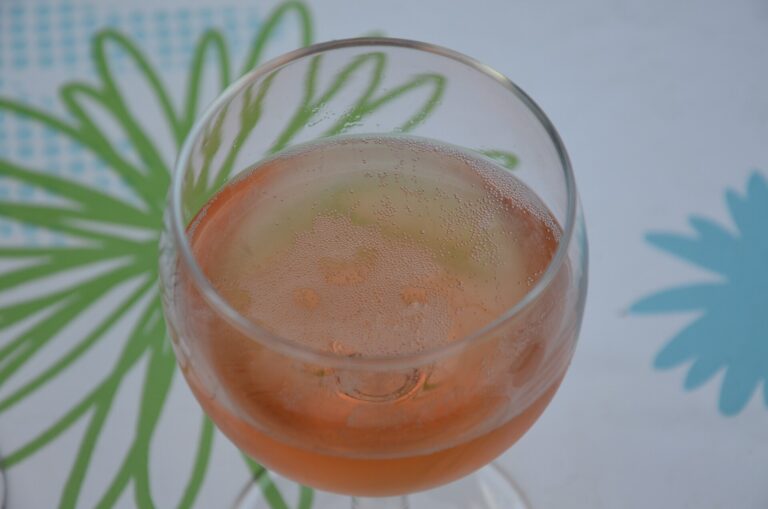
Franciacorta: an Italian sparkling wine made like Champagne
Franciacorta is an Italian sparkling wine from Lombardy, from around Lake Iseo in the province of Brescia, made by the same method as Champagne: with a second fermentation in the bottle. It is made from Chardonnay, Pinot Nero, Pinot Bianco and the local Erbamat variety and must age on the lees for at least 18 months, longer than non-vintage Champagne (15 months). It is not Champagne, because it does not come from Champagne.

What is Franciacorta
Franciacorta is a sparkling wine from the Franciacorta DOCG appellation in Lombardy, made by the traditional method, that is, with a second fermentation in the bottle.
The name refers both to the wine and to the area: hilly country in the province of Brescia, by Lake Iseo, roughly halfway between Milan and Verona. The vineyards lie in 19 municipalities and in 2021 covered around 2,160 ha, roughly a fifteenth of the vineyard area of Champagne. Average production over five years is around 142,400 hl, which corresponds to roughly 19 million 0.75 l bottles.
The DOC appellation was created in 1967, and since 1995 Franciacorta DOCG has covered sparkling wines only. According to the Michelin guide, it was the first Italian sparkling wine made exclusively by the traditional method to receive DOCG status. Since 1 August 2003, Franciacorta has been the only Italian wine that does not have to show the abbreviation DOCG on its label; the word Franciacorta alone is enough.
Is Franciacorta Champagne?
No: Franciacorta is made by the same method as Champagne, but in Italy, and the name Champagne is reserved for wine from Champagne.
Both appellations require a second fermentation in the bottle, ageing on the yeast lees and hand harvesting. They differ in region, grape varieties and the details of the rules. How to recognise Champagne by its label is explained in the guide real Champagne. We compare other sparkling wines made by this method with Champagne in the guides cava or Champagne i crémant or Champagne (pronounced kray-mon).
Franciacorta and Champagne in one table
| Feature | Franciacorta | Champagne |
|---|---|---|
| Region | Italy, Lombardy, province of Brescia (19 municipalities, around 2,160 ha) | France, Champagne (319 municipalities, around 34,200 ha) |
| Grape varieties | Chardonnay and Pinot Nero (together at least 50%), Pinot Bianco up to 50%, Erbamat up to 10% | Pinot Noir (38% of vineyards), Chardonnay (32%), Meunier (30%) |
| Harvest | by hand, whole-bunch pressing | by hand, whole-bunch pressing |
| Minimum on the lees, non-vintage | 18 months | 15 months |
| Minimum on the lees, vintage | 30 months (Millesimato) | 36 months |
| Longest category | Riserva: 60 months | no separate category in the rules |
| Minimum alcohol | 11,5% | usually about 12% |
Non-vintage Franciacorta must age longer than non-vintage Champagne (18 versus 15 months), but vintage Franciacorta for a shorter time than vintage Champagne (30 versus 36 months).
Satèn, Rosé, Millesimato and Riserva
These are four designations that tell you about the composition, ageing time and style of a Franciacorta.
- Franciacorta with no additional designation: at least 18 months on the lees, sugar from dosaggio zero (no added sugar, the equivalent of Brut Nature pronounced broot na-TEWR) to Demi-Sec (pronounced duh-MEE SEK).
- Satèn: white grapes only, at least 50% Chardonnay and at most 50% Pinot Bianco, always Brut, pressure at most 5 atmospheres, at least 24 months on the lees. In Champagne terms, its closest equivalent is Blanc de Blancs (pronounced blahn duh BLAHN), a Champagne from white grapes, in practice from Chardonnay.
- Rosé: at least 35% Pinot Nero, at least 24 months on the lees; it may also be made by blending red wine with white.
- Millesimato: a wine from a single vintage, at least 30 months on the lees, sugar from dosaggio zero to Extra Dry.
- Riserva: a vintage, at least 60 months on the lees, sugar from dosaggio zero to Brut.
The second fermentation in the bottle may not begin before 1 February of the year following the harvest. Vineyards may lie at most 550 m above sea level, and the yield may not exceed 10 t of grapes per hectare.
Where Franciacorta came from
The history of Franciacorta as a sparkling wine begins in 1961 at Guido Berlucchi's winery.
The oenologist Franco Ziliani persuaded Guido Berlucchi, owner of the vineyards and winery, to let him make a sparkling wine by the method used in Champagne. In 1961, 3,000 bottles named Pinot di Franciacorta were made. Sales of the whole appellation then grew year after year: from 2.9 million bottles in 1996 to 6.7 million in 2006. Ziliani died in 2021 at the age of 90.
Champagne for someone who likes Franciacorta
If you like Franciacorta Satèn, you should try a Blanc de Blancs Champagne, and if you love Millesimato, a vintage Champagne.
We do not sell Franciacorta, because SZAMPAN.com.pl stocks only Champagne. If you like Satèn, try the Blanc de Blancs (pronounced blahn duh BLAHN) Grand Cru from De Saint Gall (pronounced de san gal), a union of cooperatives in Avize (pronounced a-VEEZ), whose members farm around 800 ha of Chardonnay. The equivalent of Millesimato is Brut Millésimé (pronounced mee-lay-zee-may) 2015 from the house Deutz (pronounced duhts) from Aÿ (pronounced ah-EE), and to start with, as a dry non-vintage Champagne, Brut Classic from the same house.

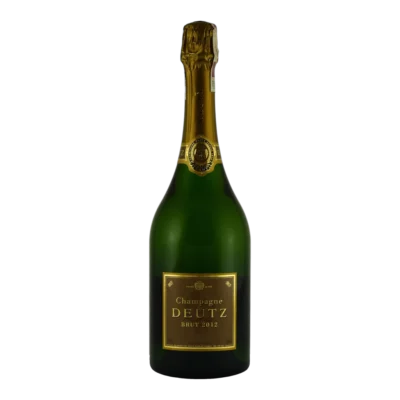

We compare all three, alongside classic bottles from the major houses, in the ranking Champagne from 250 to 400 zł.