
Sweet Champagne: Demi-Sec, Nectar and Ice, or what to buy when Brut is too sharp
Medium-sweet Champagne is Champagne labelled Demi-Sec: it has 32 to 50 grams of sugar per litre, three to six times more than a typical Brut. Only Doux Champagnes (over 50 g/l) are sweeter, and Sec Champagnes (17-32 g/l) are slightly drier. In Champagne it is a rarity, because the vast majority of bottles are Brut, but a few houses deliberately make sweeter versions: for desserts, for sweet-and-savoury cooking and for drinking over ice.
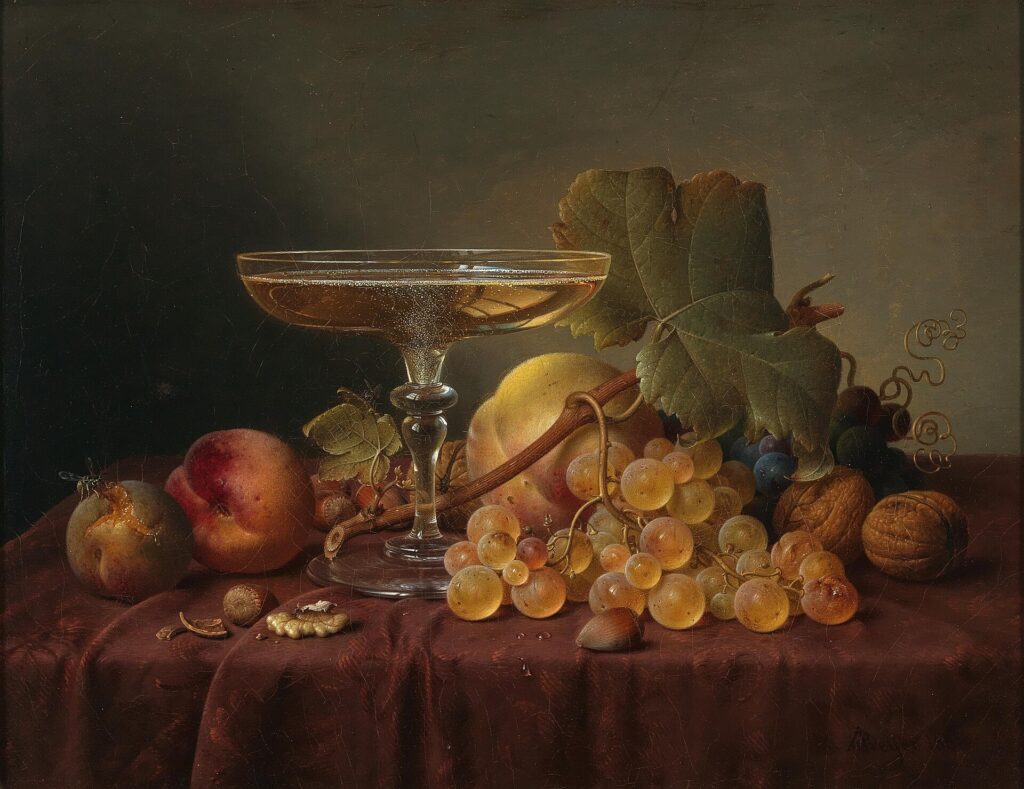
What does Demi-Sec mean on a Champagne?
Demi-Sec (pronounced duh-MEE SEK) means a medium-sweet Champagne, with 32-50 g of sugar per litre.
Literally Demi-Sec means “half-dry”, but the name is misleading. In the Polish version of EU Regulation 2019/33, whose Annex III lists the sugar levels in sparkling wines, Demi-Sec is plainly “półsłodkie” (medium-sweet). The sugar comes from a liqueur added at the very end, after the sediment has been removed from the bottle: the Comité Champagne, the organisation of Champagne growers and houses, calls it the dosage liqueur (liqueur d'expédition (pronounced lee-kur dex-pay-dee-syon)). The more liqueur, the sweeter the Champagne.
In a 125 ml glass, Demi-Sec has from 4 to over 6 g of sugar, Brut under 1.5 g. You notice the difference from the first sip, but sweetness is not the only impression: Champagne has a marked acidity that balances it. The Guide Hachette makes this point about Lanson White Label Sec, whose freshness “will balance such sweetness”.
Sec, Demi-Sec, Doux: how do they differ?
They are the three sweetest steps on the scale: Sec has 17-32 g/l, Demi-Sec 32-50 g/l, Doux over 50 g/l.
| On the label | In the Polish version of the rules | Sugar per litre | Example from our shop |
|---|---|---|---|
| Brut | bardzo wytrawne (very dry) | under 12 g | Moët (pronounced mo-ET) Impérial: 7 g/l |
| Extra Dry | wytrawne (dry) | 12-17 g | - |
| Sec | półwytrawne (medium-dry) | 17-32 g | Lanson (pronounced lahn-son) Le White Label Sec: 28 g/l |
| Demi-Sec | półsłodkie (medium-sweet) | 32-50 g | Moët Nectar Impérial (pronounced nek-TAR am-pay-ree-AL) and Ice Impérial (pronounced ice am-pay-ree-AL): 45 g/l |
| Doux | słodkie (sweet) | over 50 g | Veuve Clicquot (pronounced vuhv klee-KOH) Rich: 55 g/l |
The thresholds come from Regulation 2019/33, and the figures for the bottles from producers' data and the Guide Hachette. The rules allow a difference of up to 3 g/l between the label and the analysis of the wine. We describe the full scale, from Brut Nature (pronounced broot na-TEWR) to Doux, in the article Brut, Extra Dry, Demi-Sec: how much sugar is in Champagne.
Which sweeter Champagnes are worth knowing?
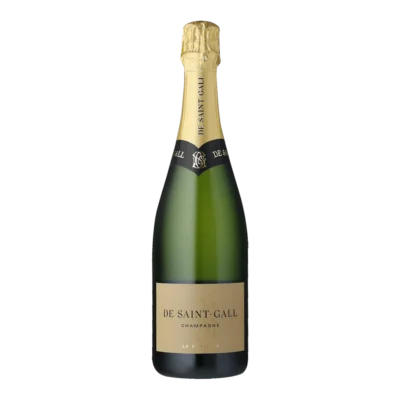
The easiest to find are two Demi-Secs from Moët & Chandon (pronounced mo-et ay shon-don), Nectar Impérial and Ice Impérial, and alongside them Lanson White Label Sec, Veuve Clicquot Rich and De Saint Gall (pronounced de san gal) Demi-Sec.
Moët & Chandon Nectar Impérial
Moët & Chandon writes that Nectar owes its name to its generous dosage, a large measure of liqueur, and its fruity fullness. It has 45 g of sugar per litre and the house officially calls it a Demi-Sec. Black varieties dominate the blend: 40-50% Pinot Noir, 30-40% Meunier, plus 10-20% Chardonnay. It is a good choice for dessert and for guests who find an ordinary Brut too sharp.

Moët & Chandon Ice Impérial and Ice Impérial Rosé
Ice Impérial has the same amount of sugar as Nectar, 45 g/l, and is also a Demi-Sec. It differs in how it is served: Moët recommends putting three ice cubes in the glass. There is also a rosé version, Ice Impérial Rosé.

Lanson Le White Label Sec
Lanson makes a Sec Champagne, one step less sweet than Demi-Sec. The Guide Hachette gives 28 g of sugar per litre of wine, 65% black grapes (including 50% Pinot Noir), 35% reserve wines and four years in the cellar. The wine is round and sweetish, but distinctly acidic on the finish. For someone who finds Brut too sharp, it is a gentler step than going straight to Demi-Sec.

Veuve Clicquot Rich
The house Veuve Clicquot designed Rich for cocktails. According to the producer, it has 55 g/l, more than the 50 g/l threshold at which the Doux category begins. It is the sweetest of the five bottles described.
De Saint Gall Demi-Sec
De Saint Gall is the brand of Union Champagne, an association of cooperatives from Avize (pronounced a-VEEZ) in the Côte des Blancs (pronounced koht day BLAHN). It makes its Demi-Sec from Chardonnay and Pinot Noir from premier cru vineyards (pronounced pruh-MYAY KREW). It goes with lemon tart, fresh fruit and foie gras.
What should you serve with sweet Champagne?
Cakes, fruit desserts and dishes that combine sweetness with saltiness; it fares badly with chocolate.
The Comité Champagne advises choosing a “more dosed” Champagne, meaning Sec or Demi-Sec, for sweet dishes. It mentions cakes, cream desserts and red fruit desserts, and gives a strawberry and pistachio tart as an example of a successful pairing. It also notes that Champagne copes badly with chocolate desserts. Sweeter Champagnes also go well with sweet-and-savoury cooking: foie gras, dishes with fruit, mildly spicy Asian food.
The rule with dessert is simple: the wine should be at least as sweet as the food. A dry Brut next to a sweet cake seems sharp and thin, while a Demi-Sec keeps its balance. Serve it at 8-10 °C, the temperature the Comité recommends for non-vintage Champagne. The exceptions are Ice Impérial, which the producer intended to be drunk over ice, and Rich, designed for cocktails. We describe how to chill a bottle quickly in the article how to chill Champagne.
Is sweet Champagne worse Champagne?
No: the sugar level describes the style of the wine, not its class.
Demi-Sec is subject to the same appellation rules as Brut: the same grapes from Champagne, second fermentation in the bottle, at least 15 months in the cellar. It differs only in the amount of liqueur added at the end. Well-known houses also have sweet versions in their ranges, for example Louis Roederer (pronounced lwee ROH-duh-rer) with Carte Blanche (pronounced kart blahnsh) Demi-Sec or Taittinger (pronounced tet-an-zhay) with its own Demi-Sec. So if you are looking for a Champagne for dessert, you are choosing the right wine for the occasion, not a “cheaper version”.
We have arranged all the sweeter Champagnes in our shop, from Sec to the versions for drinking over ice, from least sweet to sweetest, in the ranking sweet Champagne: from Sec to Veuve Clicquot Rich.


