
Which Moët & Chandon to choose: Brut Impérial, Nectar, Ice, Rosé or Grand Vintage?
For a toast, with snacks and as a gift, the surest choice is Moët Brut Impérial, a dry non-vintage Champagne the house has made since 1869. If you prefer a distinctly sweeter taste, go for Nectar Impérial or Ice Impérial, and for a big occasion the Grand Vintage. We describe all the Moët & Chandon bottles in our range; the product panels show their current price and availability.

Which Moët to choose?
If you are not sure which Moët (pronounced mo-ET) to buy, take the Brut Impérial (pronounced broot am-pay-ree-AL): it is dry, suits most occasions and is the house's cheapest bottle in the 0.75 l format.
Moët & Chandon (pronounced mo-et ay shon-don) from Épernay (pronounced ay-pair-NAY) is the largest house in Champagne, and its range is simpler than the shop shelf suggests. The core of the range is a handful of wines: Brut Impérial, Rosé Impérial (pronounced roh-ZAY am-pay-ree-AL), Nectar Impérial (pronounced nek-TAR am-pay-ree-AL), Ice Impérial (pronounced ice am-pay-ree-AL) (white and rosé) and the vintage Grand Vintage (white and rosé). The rest are the same wines in other bottles, from the 0.2 l miniature to the fifteen-litre nebuchadnezzar, or in boxes and sets with glasses. We describe the history of the house and the people who built it on the Moët & Chandon website.
The most important difference between the Moët wines is sugar. The label gives it in words, and the house gives it as a number on its website: Brut Impérial and Rosé Impérial have 7 g per litre each, Nectar and Ice 45 g, Ice Rosé 38 g, and Grand Vintage 5 g. Under European Union rules, Brut means less than 12 g of sugar per litre, Extra Brut from 0 to 6 g, and Demi-Sec (pronounced duh-MEE SEK) from 32 to 50 g. Nectar and Ice are therefore medium-sweet; we write more about this category in our article on medium-sweet Champagne.
| Wine | Sugar (g/l) | Category | Grape varieties | Best for |
|---|---|---|---|---|
| Brut Impérial | 7 | Brut | Pinot Noir 30-40%, Meunier 30-40%, Chardonnay 20-30% | toast, aperitif, snacks |
| Rosé Impérial | 7 | Brut | Pinot Noir 40-50%, Meunier 30-40%, Chardonnay 10-20% | salmon, tuna, red fruit |
| Nectar Impérial | 45 | Demi-Sec | Pinot Noir 40-50%, Meunier 30-40%, Chardonnay 10-20% | desserts, fruit, for people who find Brut too sharp |
| Ice Impérial | 45 | Demi-Sec | Pinot Noir 40-50%, Meunier 30-40%, Chardonnay 10-20% | over ice, in summer, outdoors |
| Ice Impérial Rosé | 38 | Demi-Sec | Pinot Noir 45-55%, Meunier 35-45%, Chardonnay 5-10% | over ice and with fruit |
| Grand Vintage 2016 | 5 | Extra Brut | Chardonnay 48%, Pinot Noir 34%, Meunier 18% | dinner, fish, poultry, gift |
| Grand Vintage Rosé 2016 | 5 | Extra Brut | Pinot Noir 43% (including 13% red wine), Chardonnay 42%, Meunier 15% | duck, lamb, as a gift |
The data on sugar and composition come from the wine descriptions on the house's website. A non-vintage Champagne is made each year from a new harvest and reserve wines, which is why the house gives the share of grape varieties in ranges rather than to the exact percentage.
Brut Impérial: a dry classic for every occasion
Brut Impérial is a dry non-vintage Champagne and the most frequently bought Moët; it is the one to start with.
The house has made it since 1869. The name recalls Jean-Rémy Moët's friendship with Napoleon. According to the house, every bottle contains more than 100 different wines from nearly 280 villages, of which 20-30% are reserve wines from earlier years. These are what make the Impérial taste similar every year. In the glass there is green apple, citrus and brioche, and 7 g of sugar per litre does not make it a sweet wine but softens the acidity. It goes with prawns, sushi and seafood salads, and it also works simply for a toast.

We also sell the same Champagne in smaller and larger bottles and in gift packaging. We show all the versions in the section on formats. If you are comparing the Impérial with other dry Champagnes at a similar price, have a look at ranking of Champagnes under 250 zł.
Rosé Impérial: rosé, but still dry
Rosé Impérial is the rosé version of the Impérial, with the same sugar (7 g/l) but a higher share of Pinot Noir and a distinct taste of red fruit.
The colour comes from the skins of red grapes, and on the palate there are wild strawberries, raspberries and cherries, with a slightly peppery note. The house advises serving it at 10-12 °C in a tulip glass rather than a narrow flute, because in a wider glass the aroma has room to develop. The rosé Moët is not sweeter than the white, although many people assume it is. It works better at the table than with dessert: with salmon, tuna, duck.


Nectar Impérial and Ice Impérial: the sweeter Moëts
Both have 45 g of sugar per litre, but Nectar is drunk like ordinary Champagne, and Ice over ice in a large glass.
Nectar Impérial is a classic medium-sweet Champagne: plenty of tropical fruit (pineapple, mango), mirabelle plums, apricot, a touch of vanilla. It is a good bottle for someone who finds a dry Brut sour, and for a dessert with which a Brut would taste bitter. Sweeter Champagnes from other houses are compared in ranking of sweeter Champagnes.


Ice Impérial has the same amount of sugar, but it was created for something else. Moët calls it the first Champagne created to be drunk over ice. The idea came from bartenders in Saint-Tropez who added ice to dry Champagne. In the UK, Ice went on sale in 2011, after trials in the USA, France and Germany. The house recommends three ice cubes in a large glass. The ice dilutes the wine, which is why Ice has more pronounced fruit and more sugar than the Impérial: without ice it tastes heavy, with ice just right. The rosé Ice Impérial Rosé is slightly less sweet (38 g/l) and has more red fruit.


Grand Vintage: the vintage instead of the house style
Grand Vintage is a Moët from a single harvest, made only in good years; the 2016 vintage is on sale, white and rosé.
The Impérial is meant to taste the same every year. With Grand Vintage it is the other way round: the chef de cave, Benoît Gouez, shows in it the character of a single year, even if it departs from the house style. Moët released its first vintage in 1842, and according to the house the 2016 is the 77th in its history. 2016 was a capricious year: a wet winter, a rainy spring, then drought. Moët relied on Chardonnay (48%) and kept the wine in the cellar for six years. It has only 5 g of sugar per litre, so formally it is an Extra Brut. On the palate there is more toast, nuts and dried fruit than in the Impérial. Grand Vintage Rosé 2016 contains 13% red wine from Pinot Noir and is the house's 46th rosé vintage.


Critics' scores for Grand Vintage 2016: Decanter and James Suckling 93/100 each, Revue du Vin de France 92/100. Vintages from other houses are collected in ranking of vintage Champagnes.
Older Moët vintages
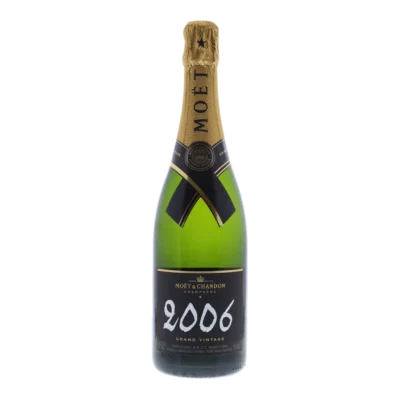
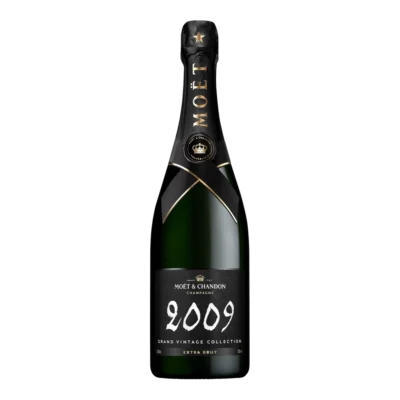
Moët keeps some vintages in its cellars much longer and releases them years later as the Grand Vintage Collection. The house currently shows the 2009 and 2000 vintages in this series, both after 14 years in the cellar and with 7 g of sugar per litre. An older Champagne loses the freshness of the fruit and gains notes of honey, toast and tobacco. Bottles like these are usually bought for an anniversary or a birthday, when the year on the label means something. We have the 1996, 1999, 2000, 2003, 2004, 2006 and 2009 vintages.


How much does Moët cost and what does the price depend on?
The price of a Moët depends on the wine, the format and the packaging: the cheapest is Brut Impérial in a small bottle, the most expensive are old vintages and bottles of 6 litres and up.
Within a single house, prices form a simple ladder. At the bottom is Brut Impérial, a step up are Nectar, Rosé and Ice, then Grand Vintage, and at the top vintages that are more than ten or even several decades old. The extra you pay for a vintage is in practice a charge for time: Grand Vintage spends six years in the cellar, the Collection versions fourteen. A box or a set with a glass adds the cost of the packaging to the price, while the wine inside is the same. We do not give amounts in the text, because prices change with deliveries; the product panels show the current price and availability of each bottle.
The cheapest way to try Moët is the 0.2 l miniature, i.e. two small glasses. A 0.375 l half-bottle is enough for three or four glasses. Per glass, larger formats do not work out cheaper: in our shop a magnum of Impérial costs more than two standard bottles, and large bottles in wooden cases even more, because you pay for the glass, the case and the effect on the table.
Formats: from 0.2 to 15 litres
We have Brut Impérial in eight sizes. In Champagne, large bottles have biblical names: 3 l is a jeroboam, 6 l a methuselah, 12 l a balthazar, and 15 l a nebuchadnezzar, i.e. twenty standard bottles. A magnum (1.5 l) is two bottles in one and a good choice for a wedding or a party for a dozen or so people. Other Champagnes in large bottles are compared in our ranking of magnums and larger formats.


Moët as a gift: boxes and sets
For the Impérial we have several kinds of packaging: a plain box, a box reading Happy Birthday for birthdays, a LOVE box for Valentine's Day and anniversaries, and a large set of six bottles with six glasses. Ice Impérial also comes in a set with a glass. Every package contains the same wine as the bottle without packaging.


Moët or Dom Pérignon?
Dom Pérignon (pronounced dom peh-reen-yon) is a separate brand from the same group, always vintage and made only from Chardonnay and Pinot Noir; it is in a different price bracket from Moët.
Moët acquired the Dom Pérignon name in 1927 from the house of Mercier (pronounced mair-SYAY), and the first vintage, 1921, went on sale in 1936. Today Dom Pérignon operates as a separate brand within the LVMH group. If you are looking for a Moët for a big occasion, Grand Vintage is the step between the Impérial and Dom Pérignon. We describe Dom Pérignon vintages and prices separately in the guide Dom Pérignon: vintages and prices.


