
Which Champagne to buy: budget, style and occasion in three steps
Champagne is easiest to choose in three steps: budget first, then style, and finally the occasion. If you do not know where to start, buy a non-vintage Brut from a well-known house or a grower: it is the most popular and the safest style. Below we take each step in turn, with links to the rankings where we have collected specific bottles.
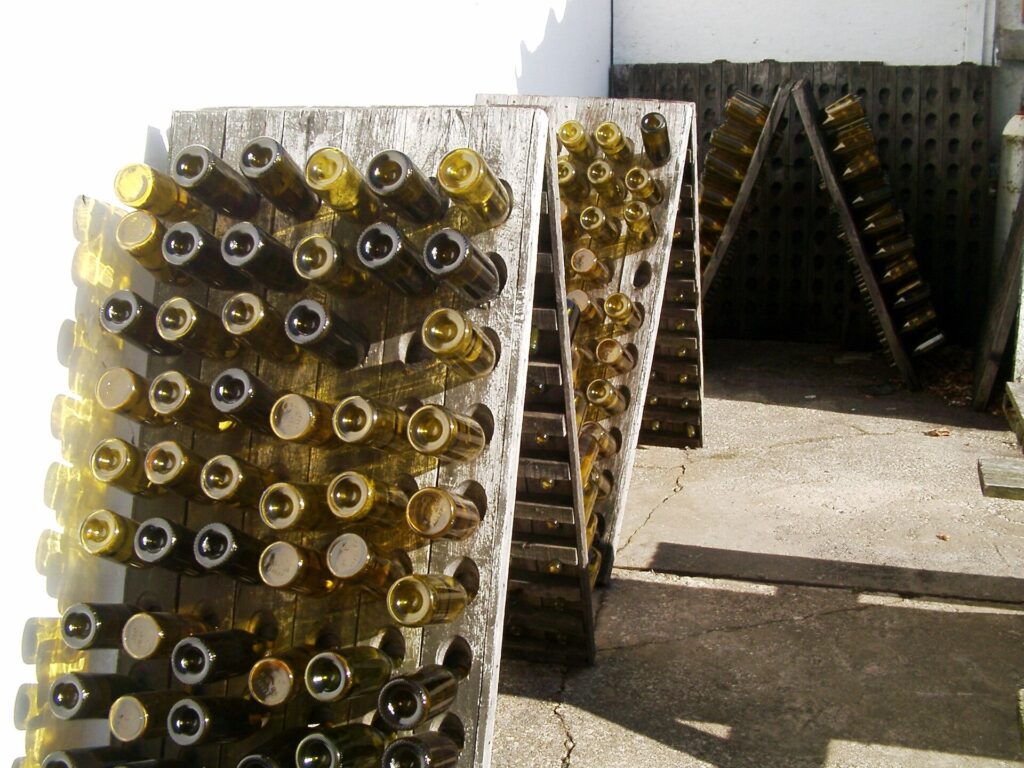
It is easy to get lost in front of a shelf of Champagne: a dozen or so houses, words like Brut and Extra Dry, vintages, boxes and gift boxes. This article puts the choice in order. If you would rather see specific bottles straight away, start with our ranking of the best Champagne, where we have picked ten Champagnes from our shop.
Where should you start if you know little about Champagne?
With a non-vintage Brut: dry, in the house's consistent style, and good both for a toast and with dinner.
Brut is Champagne with less than 12 g of sugar per litre. According to the Comité Champagne, the organisation of Champagne growers and houses, Brut accounts for about 90% of Champagne. A non-vintage Brut (there is no year on the label) is made from wines from several harvests, so a house can keep the same style every year. That is why it is hard to go wrong here, and bottles from houses such as Moët & Chandon (pronounced mo-et ay shon-don), Veuve Clicquot (pronounced vuhv klee-KOH) or Perrier-Jouët (pronounced per-yay zhoo-et) taste just as you would expect.


How much should you spend on Champagne?
Real Champagne starts at under 250 zł in our shop, and above 800 zł you will find vintages from the great houses and prestige cuvées (pronounced koo-VAY) .
The simplest way is to pick a price range and look at the ranking where we have collected the best bottles at that price:
- Champagne under 250 zł: Brut from the great houses and from growers, also in smaller bottles;
- from 250 to 400 zł: rosé, Blanc de Blancs (pronounced blahn duh BLAHN) and first vintages from growers;
- from 400 to 800 zł: vintages from well-known houses and magnums;
- over 800 zł: vintages, prestige cuvées and single-vineyard Champagnes.
You will hardly find real Champagne for less, because the grapes are picked by hand and the wine ages in the cellar for at least 15 months. We explain why, and what lies behind bottles costing a few dozen złoty, in our guide on whether you can buy Champagne for 100 zł.
Which style of Champagne should you choose?
First decide how sweet the Champagne should be, then which grapes it should be made from and whether it should come from a single vintage.
| Style | What it means | Ranking |
|---|---|---|
| Brut Nature (pronounced broot na-TEWR), Extra Brut | the driest, 0 to 6 g of sugar per litre | Extra Brut and Brut Nature |
| Brut | dry, less than 12 g of sugar per litre | the best Champagne |
| Demi-Sec (pronounced duh-MEE SEK), Doux | noticeably sweet, from 32 g of sugar per litre | sweet Champagne |
| Blanc de Blancs | white Chardonnay only | Blanc de Blancs |
| rosé | pink, usually fruitier than a white Brut | rosé Champagne |
| vintage | grapes from a single year, aged for at least 3 years | vintage Champagne |
Watch out for Extra Dry: despite its name it is sweeter than Brut, with 12 to 17 g of sugar per litre. We set out the whole scale, from Brut Nature to Doux, in the guide Brut, Extra Dry, Demi-Sec: how much sugar is in Champagne.
A large house or a grower?
A large house means a reliable, familiar style; a grower with their own vineyards means a wine with the character of one place.
Houses buy grapes from many vineyards and blend them so that the wine tastes much the same every year. Growers make Champagne from their own grapes, in smaller quantities. The two letters before the number on the label reveal who made the wine: NM stands for a house, RM for a grower. We write more about this in the guide NM, RM, CM on the label, and we have collected bottles from growers in a separate ranking.
Which Champagne for which occasion?
For a gift, a bottle in a gift box; for a wedding, a magnum or several bottles of the same Brut; for an anniversary, a vintage.
We have a separate guide for each occasion: which Champagne to give as a gift, which Champagne for a wedding, Champagne for a birthday, Champagne for Christmas and Champagne for New Year's Eve. If the bottle is meant as a keepsake, add an engraving with a name or a date.
What should you watch out for when buying?
Check that the label says “Champagne”: many cheap sparkling wines merely pretend to be Champagne.
Real Champagne comes only from Champagne in France and carries the word “Champagne” and a producer code on its label. Bottles labelled with names such as “Dorato” or “Igristoye” are not Champagne, even though they often stand next to it on the shelf. We explain how to tell the difference in our guides real Champagne and French Champagne.


