


Taittinger
pronounced tat-tan-ZHAYOne of the last great Champagne brands that bears the name of its owners and is run by them. Taittinger focuses on Chardonnay, keeps its wines in Gallo-Roman chalk pits beneath Reims and is the favourite Champagne of the literary James Bond.
See the bottlesAvailable at SZAMPAN.com.pl
7 Champagnes. Formats and packaging of the same bottle are on its page, not listed separately.




House signature
House style
Taittinger builds its Champagnes on Chardonnay, whereas most of the big houses rely on Pinot Noir.
Own vineyards
The house has 288 ha in 40 crus, one of the largest estates in Champagne.
Roman chalk
The wines age 18 m underground in galleries beneath a former abbey, added to the UNESCO World Heritage List in 2015.
At a glance
- Founded
- 1734 (as Forest-Fourneaux), owned by the Taittingers since 1932
- Based in
- Reims (Saint-Nicaise cellars)
- Type
- house (négociant-manipulant)
- Owner
- the Taittinger family (bought the house back in 2006 together with the Caisse régionale Crédit Agricole Nord Est)
- President
- Vitalie Taittinger (since 2020); Clovis Taittinger runs sales and marketing
- Chef de cave
- Alexandre Ponnavoy (since 2018)
- Vineyards
- 288 ha in 40 crus, one of the largest estates in Champagne
- Production
- around 6-7 million bottles a year (6.7 million sold in 2019)
- House style
- a large share of Chardonnay: finesse, flowers, citrus; the flagship Comtes de Champagne is a Blanc de Blancs
Data checked: October 2026.
History
- 1734
A merchant beside the abbeys
Jacques Fourneaux founded a wine trading house in Reims and worked with the Benedictine abbeys of Saint-Remi and Saint-Nicaise, which then had the best vineyards and chalk cellars in the area. After the First World War the Forest-Fourneaux firm moved to a townhouse on rue du Tambour, where in the 13th century Count Thibaud IV, known as the Songwriter, had lived.
- 1870
Flight from Lorraine
The Taittingers, a family of wine merchants from Lorraine, moved to the outskirts of Paris after the Franco-Prussian War so as not to become German citizens. They were involved with Champagne as traders, but did not yet have a house of their own.
- 1932
A château from the war years
Pierre Taittinger bought from Forest-Fourneaux the Château de la Marquetterie near Épernay, which he had come to know during the First World War, when it housed a command post. Since the 18th century the vineyards around the château have been planted with Chardonnay and Pinot Noir. The estate was developed by the Benedictine Brother Jean Oudart, one of the fathers of Champagne, and later belonged to the writer Jacques Cazotte, guillotined in 1792. Wine Spectator dates the purchase of the house a year earlier, to 1931.
- 1952
Beneath the Saint-Nicaise abbey
François Taittinger, who ran the firm from 1945, moved it into the cellars of the former Saint-Nicaise abbey. The monastery was built in the 13th century above 4th-century chalk pits dug out by the Romans. In 1952 came Comtes de Champagne, a Champagne from Chardonnay alone, named in honour of the counts who had lived in the firm's former headquarters.
- 1960
The Claude era
After François died in an accident, his brother Claude ran the house for 45 years. Production grew from 85,000 to 410,000 cases a year, and the vineyard area doubled. Claude founded a cookery competition for young chefs in 1967, a series of artist-decorated bottles in 1983, and in 1987 the Domaine Carneros winery in the Napa Valley.
- 2006
Sold and bought back
In July 2005 most of the 38 heirs sold the Taittinger group, with its hotels and Baccarat crystal, to the American fund Starwood Capital. Champagne was in uproar: a fund geared to quick profit did not fit a wine that ages for years. On 31 May 2006 Pierre-Emmanuel Taittinger, Claude's nephew, together with Crédit Agricole Nord Est, bought back the Champagne house for 660 million euros, with 288.84 ha of vineyards and 12-13 million bottles in the cellars.
- 2020
The fourth generation
Since 1 January 2020 the house has been headed by Vitalie Taittinger, previously marketing director for 12 years, while her brother Clovis runs sales. The house has rebuilt the historic Saint-Nicaise, in June 2025 opened the Polychrome restaurant by the cellars and is modernising production in a programme running to 2030. Since 2017 it has grown vines in the county of Kent; the first bottles of the English sparkling wine Domaine Evremond went on sale in spring 2025.

People
Pierre Taittinger
A member of parliament for Paris who in 1932 bought the château he had set his eye on during the war, and with it the Forest-Fourneaux firm. The brand takes his name.
Claude Taittinger
He joined the firm in 1949 aged 22 and turned the family house into a global brand. A patron of art and gastronomy, co-founder of Domaine Carneros. He died on 3 January 2022, aged 94.
Pierre-Emmanuel Taittinger
The son of Jean Taittinger, who went into politics instead of Champagne. In 2006 he surprised the trade by buying the house back from the American fund and returning it to the family.
Vitalie Taittinger
Pierre's great-granddaughter, for 12 years director of marketing and communications. The first months of her presidency coincided with the pandemic, which she used to draw up a strategic plan: the new Saint-Nicaise, modernised production and environmental certifications.
Alexandre Ponnavoy
He came to Taittinger in 2015 and for three years worked alongside Loïc Dupont, who retired after 34 years at the house. He is responsible for all the house's blends.
House style
Taittinger builds its style on Chardonnay, whereas most of the big houses rely on Pinot Noir. The house is one of the main buyers of grapes from the Côte des Blancs, and Comtes de Champagne is made solely from Chardonnay from five grand cru villages: Avize, Chouilly, Cramant, Le Mesnil-sur-Oger and Oger. The wines are light and floral, with a note of brioche that comes from long ageing on the lees.
Its own 288 ha in 40 crus give the house considerable independence from the grape market. The wines age 18 metres underground in the three kilometres of Saint-Nicaise galleries, which in 2015 joined the UNESCO World Heritage List together with other hillsides and cellars of Champagne. Comtes de Champagne takes more than ten years from harvest to release.
Key cuvées
- Brut Réserve
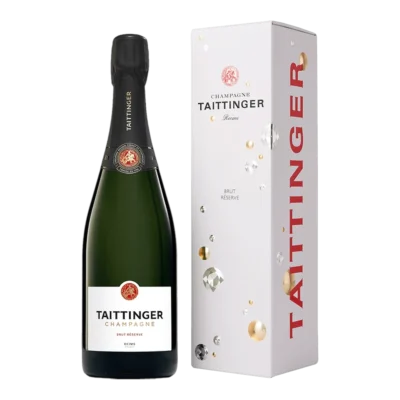
- The house's basic Brut, with a high proportion of Chardonnay in the blend.Serving: as an aperitif, with prawns, sushi and grilled fish.
- Prélude Grands Crus
- A blend of Chardonnay and Pinot Noir solely from grand cru villages.Serving: scallops, chicken in cream sauce, soft cheeses.
- Prestige Rosé
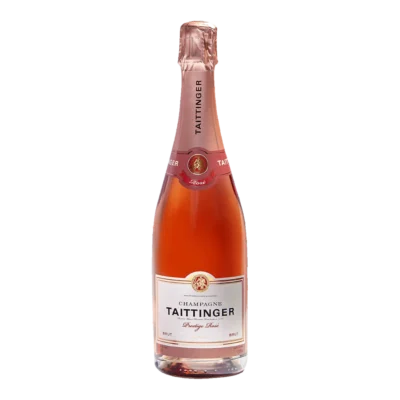
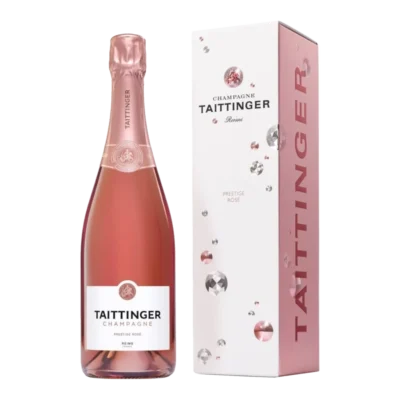
- The house's non-vintage rosé Champagne.Serving: salmon, tuna, duck, red fruit.
- Brut Millésimé
- Vintage. The 2016 edition has 70% grand cru grapes and five years of ageing in the cellar.Serving: lobster, guinea fowl, veal.
- Comtes de Champagne Blanc de Blancs
- The house's flagship Champagne since 1952, Chardonnay alone from Côte des Blancs grands crus, made only in good years. The 2013 vintage won the Vinofed award for the world's best sparkling wine in 2025.Serving: caviar, oysters, sole cooked in butter, turbot.
- Comtes de Champagne Rosé
- The rosé version of the flagship Champagne: around 70% Pinot Noir and 30% Chardonnay.Serving: pigeon, lamb, beef carpaccio.
Curiosities
- In the novel “Casino Royale” Ian Fleming has Bond order a 1945 Taittinger. The sommelier recommends the 1943 Blanc de Blancs of the same brand, and Bond tells Vesper Lynd that it is a little-known brand, “but it is probably the finest champagne in the world”. source
- In the film “From Russia with Love” (1963) Sean Connery chills a bottle of Taittinger in a river, and on the Orient Express he orders a Blanc de Blancs. The SPECTRE agent, who orders red Chianti with fish, later slips a sleeping draught into Tatiana's glass of Taittinger. source
- anecdote General de Gaulle treated Nikita Khrushchev to one of the first vintages of Comtes de Champagne, the 1955. The Soviet leader is said to have remarked: “We don't have this at home”. source
- The food critic Périco Légasse, writing in the weekly “Marianne”, called Comtes de Champagne “the Montrachet of Champagne”. source
- From 1952 to the release of the 2008 vintage, the house released only 37 vintages of Comtes de Champagne. source
- The cookery competition founded by Claude Taittinger in 1967 still runs today; the 59th edition was named ArsNova. source
- The Taittinger Collection series consists of bottles dressed by artists, from Victor Vasarely to Roy Lichtenstein. The thirteenth, from 2016, was designed by the photographer Sebastião Salgado. Lichtenstein's portrait now hangs in the house's reception. source
- anecdote Clovis Taittinger is known for saying that Champagne is the best way to say “I love you” in any language. source
- In 2017 Taittinger became the first Champagne house to plant vines in England, at Chilham in the county of Kent. The first 100,000 bottles of Domaine Evremond came out in 2025. source
Chardonnay was brought to Champagne from a crusade by Count Thibaud IV, who lived in the house's former headquarters. Hence the name Comtes de Champagne.
It is a lovely legend, but genetic research at the University of California, Davis showed that Chardonnay, a cross between Pinot Noir and Gouais Blanc, belongs to the Pinot family and is not a newcomer from Cyprus. The cuvée's name refers to the counts, not to where the grapes came from. source
“Champagne must be generous; it must offer a dream.”


Frequently asked questions
What Champagne does James Bond drink in Fleming?
Taittinger. In the novel “Casino Royale” Bond orders a 1945 Taittinger, and the sommelier recommends the 1943 Blanc de Blancs; Bond tells Vesper Lynd that it is “probably the finest champagne in the world”. In the film “From Russia with Love” Sean Connery chills a bottle of Taittinger in a river.
What is Taittinger Comtes de Champagne?
The house's flagship Champagne since 1952: Chardonnay alone from five grand cru villages of the Côte des Blancs, made only in good years, more than ten years from harvest to release. The 2013 vintage won the Vinofed award for the world's best sparkling wine in 2025. There is also a rosé version led by Pinot Noir.
Did Count Thibaud IV bring Chardonnay to Champagne?
That is a legend. Genetic research at Davis showed that Chardonnay is a cross between Pinot Noir and Gouais Blanc, not a newcomer from Cyprus. The name Comtes de Champagne refers to the counts who lived in the firm's former headquarters on rue du Tambour, not to where the grapes came from.
Which Taittinger should you start with?
Brut Réserve, the house's entry-level Brut with a clear share of Chardonnay: light, floral, with a note of brioche. A step further is Prélude Grands Crus, from grand cru villages only, and for a big occasion Comtes de Champagne.
Who owns Taittinger?
The Taittinger family, which in 2006 bought the house back from the American fund Starwood together with Crédit Agricole Nord Est. Vitalie Taittinger has been president since 2020, and her brother Clovis runs sales. It is one of the last great Champagne brands run by the family whose name it bears.
Other houses
All houses Moët & Chandonpronounced mo-ET ay shahn-DOHN50 bottles
 Dom Pérignonpronounced dom peh-ree-NYOHN27 bottles
 Bollingerpronounced boh-lan-ZHAY19 bottles
 Krugpronounced kroog13 bottles
 Charles Heidsieckpronounced sharl ED-sik10 bottles
 Veuve Clicquotpronounced vuhv klee-KOH11 bottles
 Deutzpronounced duhts10 bottles
 Lansonpronounced lahn-SOHN10 bottles
- Marguetpronounced mar-GAY10 bottles
 Louis Roedererpronounced lwee ROH-duh-rer9 bottles
- J-M Sélèquepronounced zhee em seh-LEK10 bottles
 Ruinartpronounced rwee-NAR8 bottles
Sources
- Wikipedia FR: Champagne Taittinger
- Wikipedia EN: Taittinger
- Wine Spectator: Claude Taittinger, Champagne Icon, Dies
- Hatch Mansfield: Champagne Taittinger, people
- La Libre: interview with Vitalie Taittinger (December 2024)
- Relais & Châteaux: Taittinger
- Club Oenologique: Taittinger cellar tour (2025)
- Taittinger: The Comtes de Champagne
- James Bond Lifestyle: Taittinger Champagne
- Le Figaro Vin: Taittinger remporte le prix du meilleur vin effervescent du monde (2025)
- Vinetur: Taittinger 2016 Brut Millésime
Photos: Unsplash, Unsplash licence (Wikimedia Commons); Victor Grigas, CC BY-SA 4.0 (Wikimedia Commons); Trace, CC0 (Wikimedia Commons); G.Garitan, CC BY-SA 3.0 / GFDL (Wikimedia Commons); Agence Meurisse, public domain (Wikimedia Commons).


