


Leconte
pronounced luh-KOHNTA family estate from Troissy in the Marne valley, which the fifth generation, Alexis Leconte, has turned into a house of barrel-made single-plot cuvées. Totem, the house's calling card, is a Champagne with 70% Meunier.
See the bottlesAvailable at SZAMPAN.com.pl
1 Champagne. Formats and packaging of the same bottle are on its page, not listed separately.
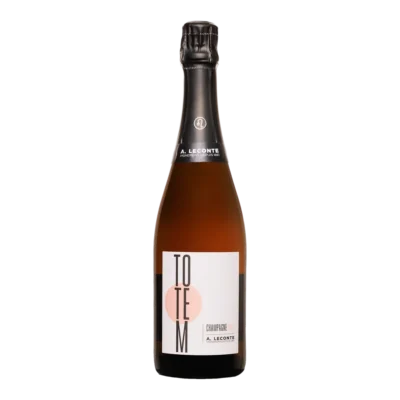
House signature
The Totem of the Marne
The house's signature wine, Totem, is about 70% Meunier from 40 plots around Troissy.
The Burgundy school
Alexis Leconte brought back from Burgundy and Alsace the habit of vinifying in casks and thinking in terms of individual plots.
A plot in Aÿ
A plot in the grand cru of Aÿ yields Ageius, a pure Pinot Noir to which Gault&Millau gave 94/100 for the 2016 vintage.
At a glance
- Founded
- 1861 (Onésime Leconte begins growing vines)
- Based in
- Troissy, Vallée de la Marne (near Dormans)
- Type
- grower (récoltant-manipulant), family-run; formerly Champagne Xavier Leconte, today A. Leconte / Alexis Leconte
- Owner
- Alexis Leconte
- President
- Alexis Leconte (has run the house on his own since 2015)
- Chef de cave
- Alexis Leconte
- Vineyards
- approx. 10 ha in 40 plots: Troissy, Dormans, Mareuil-le-Port, Vandières and Aÿ
- Production
- no public data
- House style
- Meunier, 400 l casks, often no malolactic fermentation, dosage 0-6 g/l, single-plot cuvées; certified organic since the 2023 harvest
Data checked: October 2026.
History
- 1861
Onésime Leconte
In 1861 Onésime Leconte began growing vines in Troissy. The family counts its generations from him; Gault&Millau writes of six generations in this village.
- 20th century.
Aimé ploughs the soil
Alexis's grandfather, Aimé, ploughed the soils and tended the vines. The tradition of working the soil returned to the estate years later, when his grandson gave up herbicides.
- the 1980s.
Xavier puts the estate in order
His father, Xavier Leconte, put the estate in order in the 1980s: he bought a new press and smaller vats and commissioned the first soil studies. The house was then called Champagne Xavier Leconte, the name under which it still appears in some guides.
- 2013-2015
Alexis returns from Burgundy
Alexis Leconte joined the house in 2013, after studying in Champagne and working in Burgundy and Alsace. Since 2015 he has run it on his own. In the same year he gave up herbicides and began ploughing the vineyards.
- 2016-2023
Biodynamics and certification
Since 2016 Alexis has used biodynamic practices and worked according to the phases of the moon, in the vineyard and in the cellar. Since the 2023 harvest the estate has been certified organic.

People
Alexis Leconte
He trained in Burgundy and Alsace and brought back from there the habit of vinifying in casks and thinking in terms of individual plots. He says that only base wines of great precision deserve to be called Champagne.
Xavier Leconte
In the 1980s he modernised the estate and named it Champagne Xavier Leconte.
House style
The vineyards cover about 10 ha in 40 plots on varied soils: sands, sandstones, clays, limestones, stones, meulière (millstone) and chalk. Meunier dominates, but Alexis Leconte is planting more and more Chardonnay and Pinot Noir. The most valuable plot, La Fosse, lies in the Grand Cru of Aÿ.
In the cellar Alexis does not separate the juice into cuvée and taille, which is rare in Champagne. The wines age mainly in 400-litre casks, in large vats and in stoneware or terracotta jars. Malolactic fermentation is often blocked, and bâtonnage is skipped. The Champagnes usually spend 18-24 months or longer on the lees, with a dosage of 0 to 6 g/l.
According to Gault&Millau 2026, Totem Rosé is expressive and ripe, with notes of caramel, orange, chocolate and candied lemon. The guide writes that it is a rosé better suited to hearty meals than to light moments.
Key cuvées
- Totem
- The house's signature wine: about 70% Meunier, 20% Pinot Noir, 10% Chardonnay, at least three years in the cellar, 6 g/l. Gault&Millau 88/100.Serving: roast poultry, charcuterie, pâté, mushrooms.
- Totem Rosé
- The rosé version of Totem; Gault&Millau gives 50% Meunier and 25% Pinot Noir, rated 87/100. In our range.Serving: duck à l'orange, roast pork, Asian cuisine.
- La Terre Mère
- An Extra Brut Blanc de Noirs from pure Meunier; 88/100.Serving: beef tartare, veal, Comté.
- Arietis
- Pure Meunier from Vandières, Brut Nature, three years in 400 l casks.Serving: fish tartare, wild mushrooms, goat's cheese.
- Aria
- Blanc de Blancs from the Longues Raies plot, Extra Brut 3 g/l, wild yeasts.Serving: scallops, fish cooked in butter, sushi.
- Ageius
- Blanc de Noirs from Pinot Noir from the La Fosse plot in the Grand Cru of Aÿ; 2016 vintage: 94/100 Gault&Millau.Serving: pigeon, game, aged Comté.
Curiosities
- Alexis Leconte does not separate the press juice into “cuvée” and “taille”, although this is standard practice in Champagne; all of the permitted juice goes into the wines. source
- Besides Champagne the house makes Coteaux Champenois, ratafia and herbal-citrus liqueurs under the HERESIA brand. source
- Ageius, a pure Pinot Noir from a single plot in Aÿ, is the house's highest-rated wine: 94/100 in Gault&Millau for the 2016 vintage. source
- In the guides the house appears under three names: Xavier Leconte, A. Leconte and Alexis Leconte. Gault&Millau has separate entries for Xavier Leconte and A. Leconte. source
- Troissy lies a few kilometres from Dormans, home to the Mémorial des batailles de la Marne, a memorial to the two First World War battles of the Marne. source
“Only base wines of great precision deserve to become Champagne.”

Frequently asked questions
How does Xavier Leconte differ from Alexis Leconte?
It is the same house in Troissy, just under the names of successive generations. The father, Xavier, named it Champagne Xavier Leconte in the 1980s, and since 2015 his son Alexis has run the house on his own under the A. Leconte brand. You may come across all three names in the guides.
Which Leconte Champagne should you start with?
Totem: about 70% Meunier, 20% Pinot Noir and 10% Chardonnay, at least three years in the cellar, 6 g/l of sugar, 88/100 Gault&Millau. It shows well what Meunier can do in the Marne Valley. If you want more, try La Terre Mère, made from Meunier alone.
What should you serve with Leconte Totem Rosé?
Heartier dishes, as this is an expressive, ripe rosé with notes of caramel, orange, chocolate and candied lemon. Gault&Millau says plainly that it goes better with food than with light moments. It works well with duck or roast pork.
Is Leconte Champagne organic?
Yes, the estate has been certified organic since the 2023 harvest. Alexis Leconte gave up herbicides in 2015, ploughs his vineyards and has followed biodynamic practices since 2016, working by the phases of the Moon.
What is unusual about Leconte Champagne?
Alexis Leconte does not separate the press juice into “cuvée” and “taille”, even though this is standard practice in Champagne. The wines are aged mainly in 400-litre barrels and stoneware jars, malolactic fermentation is often blocked, and the dosage is 0-6 g/l.
Other houses
All houses Moët & Chandonpronounced mo-ET ay shahn-DOHN50 bottles
 Dom Pérignonpronounced dom peh-ree-NYOHN27 bottles
 Bollingerpronounced boh-lan-ZHAY19 bottles
 Krugpronounced kroog13 bottles
 Charles Heidsieckpronounced sharl ED-sik10 bottles
 Veuve Clicquotpronounced vuhv klee-KOH11 bottles
 Deutzpronounced duhts10 bottles
 Lansonpronounced lahn-SOHN10 bottles
 Louis Roedererpronounced lwee ROH-duh-rer9 bottles
- Marguetpronounced mar-GAY10 bottles
- J-M Sélèquepronounced zhee em seh-LEK10 bottles
 Ruinartpronounced rwee-NAR8 bottles
Sources
- Vins et Millésimes - Alexis Leconte
- Gault&Millau - A. Leconte
- Gault&Millau - A. Leconte Totem Rosé
- Gault&Millau - Xavier Leconte
- Vinmonopolet - A. Leconte Totem Rosé
- Wikipedia FR - Dormans
Photos: Fab5669, CC BY-SA 3.0 (Wikimedia Commons); GO69, CC0 (Wikimedia Commons); author unknown, public domain (Wikimedia Commons).


