


Alain Bernard
pronounced a-LAN bair-NARA family house in Dizy, a village next to Hautvillers, where the Bernards' ancestors have grown vines since at least the 17th century. The founder, Arthur Bernard, made his own Champagne after hours while working for someone else, and dug the cellars where the bottles lie today with his own hands.
See the bottlesAvailable at SZAMPAN.com.pl
5 Champagnes. Formats and packaging of the same bottle are on its page, not listed separately.


House signature
Champagne after hours
Arthur Bernard worked for another house in Dizy, and made his own wine from a few vines, selling it on Sundays and holidays.
Dug by hand
The founder dug the cellars under the house himself; today the bottles rest there on the lees for 3-4 years.
A horse in the vineyard
A draught horse ploughs the Pierre Robert plot in Aÿ, the source of the Blanc de Noirs.
At a glance
- Founded
- 1912
- Based in
- Dizy (near Épernay), 116 rue Danielle Casanova
- Type
- grower (récoltant-manipulant), member of the Vignerons Indépendants
- Owner
- the Bernard family
- President
- Benoît and Isabelle Bernard, the founder's grandson and his wife
- Chef de cave
- Benoît Bernard
- Vineyards
- only Grand Cru Aÿ and Premier Cru Dizy, Hautvillers and Cumières; in 2013, 50% Chardonnay, 47% Pinot Noir, 3% Meunier
- Production
- the house does not give a current figure; in 2013 around 85,000 bottles
- House style
- only the first pressing fraction, fermentation in steel or oak, at least 3 years in hand-dug cellars, riddling by hand
Data checked: October 2026.
History
- 1698
A wedding in Hautvillers
The family comes from Hautvillers, the village of the abbey where Dom Pérignon worked. The house shows a marriage certificate from 1698 as proof that the Bernards were already winegrowers there in the 17th century, and perhaps earlier.
- 1912
Arthur starts after hours
Arthur Bernard worked at one of the Champagne houses in Dizy, among other things as chef de cave. In his spare time he made his own wine from a few vines around Hautvillers, and sold it himself on Sundays and holidays. The history of the house is counted from this year.
- 20th century.
Cellars dug by hand
Arthur dug cellars under the house in Dizy, entirely by hand. To this day bottles are kept there for years before disgorgement. Over time the family bought more plots, only in Grand and Premier Cru villages.
- 2012
Young talent
The house was among the winners of the Jeunes Talents du Champagne 2012 competition, as it notes in its news. It is run by Benoît and Isabelle Bernard, the generation of Arthur's grandchildren.
- today
A horse in the Grand Cru
The Bernards plough part of their vineyards with a draught horse called Viktor, including the Pierre Robert plot in Grand Cru Aÿ, from which they make the Blanc de Noirs. The house holds HVE certification, and in 2024 it appeared on the morning programme Télématin on France 2.

People
Arthur Bernard
According to the house, he was at once a vine grower, winemaker, chef de cave and salesman on Sundays and holidays. He dug the family cellars with his own hands.
Benoît Bernard
He runs the house with his wife, combining the knowledge of his ancestors with modern but natural viticulture.
Isabelle Bernard
Together with her husband she is responsible for the house's range.
House style
The vineyards lie on the historic slopes of Dizy, Hautvillers and Cumières (Premier Cru) and Aÿ (Grand Cru). According to the house, even before Champagne was born, highly regarded still wines were made here and sent to the courts of France and England. The family leaves grass between the rows, ploughs, fertilises with humus and works with a horse. The grapes are picked by hand.
The Bernards buy neither grapes nor wine and send nothing to the cooperative. After slow pressing they take only the cuvée, the first fraction, and ferment it in steel or in oak barrels. The bottles rest on the lees for 3 to 4 years, then are turned by hand and disgorged on site.
Key cuvées
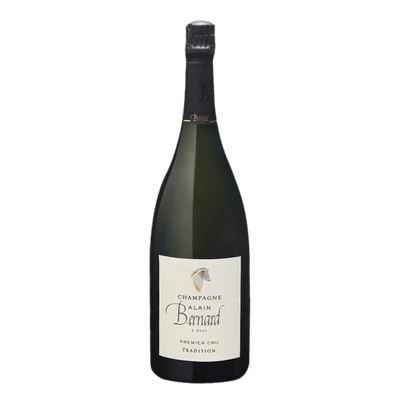
- Tradition Brut Premier Cru
- The house's core blend from Dizy, Hautvillers, Cumières and Aÿ; in 2013, 60% Chardonnay, 35% Pinot Noir, 5% Meunier. Also in half-bottles and magnums.Serving: as an aperitif, with prawns, sushi and light snacks.
- Esprit d'Arthur Extra Brut Grand Cru
- A cuvée named in honour of the founder, from grand cru grapes.Serving: oysters, fish carpaccio, sashimi.
- Blanc de Noirs Grand Cru
- 100% Pinot Noir from the horse-ploughed Pierre Robert plot in Aÿ, Brut Nature; currently the 2016 harvest.Serving: beef tartare, roast poultry, veal, hard cheeses.
- Rosé de Saignée Premier Cru
- 100% Pinot Noir with skin maceration. Red fruit and a note of pepper.Serving: duck, grilled salmon, Parma ham, tartare.
- Histoire de Fût
- 100% Chardonnay fermented in barrel, Brut Nature.Serving: scallops in butter, lobster, chicken in cream sauce.
- Rosé Entre Parenthèses Premier Cru
- The house's second rosé Champagne. The house proudly notes in its news that it was drunk in the Seychelles.Serving: for a summer party, with salmon tartare and strawberries.
Curiosities
- All the house's cellars were dug by hand by the founder, Arthur Bernard. source
- The house has kept a marriage certificate from 1698 that confirms the family's presence in Hautvillers. source
- Viktor the draught horse ploughs the Pierre Robert plot in the Grand Cru, from which the Blanc de Noirs is made. source
- In 2023 the house received 4 stars in a German guide, and the weekly Le Point (no. 2046) wrote about its wines. source
- On request the house prints personalised labels, and it calls its ratafias Le Rubis d'Alain and L'Ambre d'Alain. source
Frequently asked questions
Where does Alain Bernard Champagne come from?
From Dizy near Épernay. The vineyards lie in grand cru Aÿ and in premier cru Dizy, Hautvillers and Cumières. The family comes from Hautvillers, the village of Dom Pérignon's abbey, as a marriage certificate from 1698 confirms.
Which Alain Bernard Champagne should you try first?
Tradition Brut Premier Cru, the house's core blend from four villages, with a predominance of Chardonnay. It also comes in half-bottles and magnums. If you are looking for something fuller, try the Blanc de Noirs, made purely from Pinot Noir from Aÿ.
Does Alain Bernard buy grapes?
No. The Bernards buy neither grapes nor wine and give nothing to the cooperative. They take only the first pressing fraction, turn the bottles by hand and disgorge them on site.
What does Brut Nature on the label mean?
That no sugar was added to the wine after disgorgement, so the Champagne is completely dry. At the Bernards' this is how the Blanc de Noirs from Aÿ and Histoire de Fût, a barrel-fermented Chardonnay, are made. They suit food rather than an aperitif.
Other houses
All houses Moët & Chandonpronounced mo-ET ay shahn-DOHN50 bottles
 Dom Pérignonpronounced dom peh-ree-NYOHN27 bottles
 Bollingerpronounced boh-lan-ZHAY19 bottles
 Krugpronounced kroog13 bottles
 Charles Heidsieckpronounced sharl ED-sik10 bottles
 Veuve Clicquotpronounced vuhv klee-KOH11 bottles
- Marguetpronounced mar-GAY10 bottles
- J-M Sélèquepronounced zhee em seh-LEK10 bottles
 Louis Roedererpronounced lwee ROH-duh-rer9 bottles
 Lansonpronounced lahn-SOHN10 bottles
 Deutzpronounced duhts10 bottles
 Laurent-Perrierpronounced loh-RAHN peh-ree-AY8 bottles
Sources
- Champagne Alain Bernard - home page
- Champagne Alain Bernard - Une histoire de famille
- Champagne Alain Bernard - Vignoble and Exploitation
- Champagne Alain Bernard - Nos cuvées
- Champagne Alain Bernard - Actualités
- Wikipedia FR - Alain Bernard (swimmer)
Photos: October Ends, CC BY-SA 3.0 (Wikimedia Commons); Dguendel, CC BY 4.0 (Wikimedia Commons).


