


Pol Roger
pronounced pol roh-ZHAYA family house from Épernay, in the hands of the founder's descendants for more than 175 years. Winston Churchill drank its Champagne for half a century, and the house repaid him with a prestige cuvée of its own.
See the bottlesAvailable at SZAMPAN.com.pl
5 Champagnes. Formats and packaging of the same bottle are on its page, not listed separately.


We don't have these bottles at the moment
Leave your e-mail address on the bottle's page and we will let you know when we get it in.


House signature
Six generations of the family
The house still belongs to Pol Roger's descendants; in 2020 the sixth generation joined the firm.
A customer for half a century
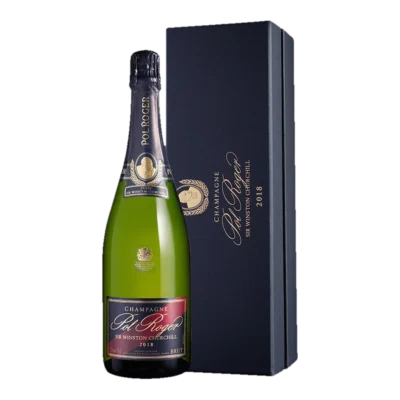
Churchill drank Pol Roger from 1908, and since 1984 the house's prestige cuvée has borne his name.
Cool cellars
The wines age in cellars 33 metres below Épernay, for a long time on the lees, which according to the house is where their style comes from.
At a glance
- Founded
- 1849 (first sale of wine on 2 January)
- Based in
- Épernay, avenue de Champagne
- Type
- a family-owned, independent house (négociant-manipulant)
- Owner
- descendants of Pol Roger, the Pol-Roger and de Billy families; the supervisory board has been chaired since 2019 by Véronique Collard de Billy
- President
- Laurent d'Harcourt (chairman of the management board since 2013); by the end of 2026 he is to be succeeded by Hadrien Mouflard, until now head of Champagne Ayala
- Chef de cave
- Damien Cambres (since 2 April 2018)
- Vineyards
- 92 ha of its own vineyards; the house buys the rest of its grapes from growers
- Production
- about 1.7-2 million bottles a year (1.7 million and over 84% exported according to the house in 2018; about 2 million according to Sur-la-pointe in 2024)
- House style
- Brut Réserve from three grape varieties in equal parts, long ageing on the lees in cool cellars 33 m underground
Data checked: October 2026.
History
- 1849
A seventeen-year-old from Aÿ
Pol Roger, the son of a notary from Aÿ, sold his first wine on 2 January 1849, to a merchant from his home village. He was forced into business by the illness of his father, who could no longer run his practice. In 1851 he moved the firm to Épernay, and from 1855 he focused on dry Brut, because that was the Champagne the English liked. He died of pneumonia in December 1899.
- 1900
The night the cellars collapsed
On 23 February 1900, two months after the founder's death, part of the cellars and buildings collapsed. His son Maurice woke at two in the morning to a rumbling like thunder. Buried under the rubble were 500 barrels holding almost the entire 1899 harvest and about 1.5 million bottles, and the street sank by four metres. Neighbours helped the house, above all Moët & Chandon and Mercier. That same year the sons, Maurice and Georges, received permission to change their surname to Pol-Roger.
- 1912-1959
The voice and the nose
The brothers divided the work: Maurice was the “voice” of the firm and handled sales, Georges was the “nose”, made the wine and kept an eye on the finances. In 1912 Maurice became mayor of Épernay and was still mayor during the German occupation of the town in 1914. In 1933 the house opened new cellars on the avenue de Champagne. Georges died in 1950, Maurice in 1959.
- 1944-1965
Odette and Churchill
On 12 November 1944, at a lunch given by Ambassador Duff Cooper in Paris, Maurice's daughter-in-law, Odette Pol-Roger, met Winston Churchill. Pol Roger 1928 was served. From then on she sent him a case of that vintage every year for his birthday. Churchill never managed to visit the house, but he called its address “the most drinkable address in the world”. After his death in 1965 the Brut labels for the British market were given a black border.
- 1984
A cuvée for the prime minister
In 1984, at Blenheim Palace, the house presented Cuvée Sir Winston Churchill from the 1975 vintage, released only in magnums. It replaced P.R. Réserve Spéciale, made from the 1971 to the 1988 vintage, at the top of the range. Earlier, in 1961, the house had introduced a vintage rosé, and a few years later a Blanc de Blancs. In 2001 the medium-sweet Rich was added, and in 2007 Pure, with no added sugar.
- 2018-2026
A new winery and a new chairman
In April 2018 Damien Cambres succeeded Dominique Petit, chef de cave for 19 years. While digging the foundations for a new building on the site of the collapsed cellars, the two of them found bottles from 1887-1898. In 2024, for the house's 175th anniversary and the 150th anniversary of Churchill's birth, Pol Roger opened a new 50-million-euro facility: 18,000 m2 on four levels, resting on 298 piles. In June 2026 it was announced that Laurent d'Harcourt, chairman since 2013, would be succeeded by the end of the year by Hadrien Mouflard of Champagne Ayala.

People
Pol Roger
Born on 24 December 1831 in Aÿ, he began trading in wine at seventeen. Within thirty years he had built a well-known brand and been named purveyor to the Austro-Hungarian court. In 1900 his sons added his first name to their surname: Pol-Roger.
Odette Pol-Roger
Née Wallace, a great-granddaughter of the collector Richard Wallace, she married Jacques Pol-Roger in 1933. During the occupation she sometimes acted as a courier for the Resistance and cycled 150 km from Épernay to Paris. The Gestapo detained her for an RAF badge on her dress and released her after five hours of questioning. After her husband's death in 1964 she co-ran the house.
Damien Cambres
An oenologist born in Châlons-en-Champagne, he worked for twenty years in cooperatives: from 1997 to 2012 at Nicolas Feuillatte, then as production director and managing director of Gouttes d'Or Union. He came to Pol Roger at the beginning of 2017, a year before taking over the cellars.
Hubert de Billy
Son of Christian de Billy, with the firm since 1988, first as head of sales in France, then as export and marketing director and member of the management board. In 2020 the sixth generation joined the house: Bastien Collard de Billy as secretary general.
House style
Pol Roger has 92 ha of vineyards and buys in the rest of its grapes from growers. The non-vintage Champagne, Brut Réserve, is made up of 30 base wines from at least three vintages and three grape varieties in equal parts: Pinot Noir, Chardonnay and Meunier. In the prestige Cuvée Sir Winston Churchill Pinot Noir dominates, and the grapes come exclusively from grand cru vineyards that were already planted in Churchill's lifetime. The house keeps the exact proportions secret.
Dominique Petit described the house style as floral, subtle wines that owe their essence to long ageing on the lees. The cellars go 33 metres underground and are known for being cold. Bottles here are turned by hand, and the new facility of 2024 doubled the space for wines after disgorgement, so that they can rest longer before shipping.
Key cuvées
- Brut Réserve
- A non-vintage Champagne and the house's calling card: 30 base wines from at least three vintages, Pinot Noir, Chardonnay and Meunier in equal parts.Serving: as an aperitif, with fish, oysters and prawns, and with light starters.
- Cuvée Sir Winston Churchill
- A prestige cuvée since the 1975 vintage, made only in the best years and released later than other vintages; Pinot Noir from grand cru dominates.Serving: mature cheeses, poultry in sauce, sweetbreads, lobster; best after a few years in the cellar.
- Brut Vintage
- A vintage Champagne, usually about 60% Pinot Noir and 40% Chardonnay, depending on the year.Serving: roast poultry, veal, fish in butter sauce.
- Blanc de Blancs
- A vintage Champagne made only from Chardonnay, introduced a few years after the 1961 vintage rosé.Serving: oysters, scallops, sole, sushi.
- Rosé Vintage
- A vintage rosé, in the range since 1961.Serving: salmon, duck, tuna tartare, red fruit.
- Pure
- An Extra Brut with no added sugar, introduced in 2007.Serving: oysters, fish carpaccio, raw seafood.
Curiosities
- Churchill named his favourite racehorse Pol Roger. The horse won the Black Prince Stakes at Kempton Park on 2 June 1953, the day of Elizabeth II's coronation, and Churchill told Odette by telegram. source
- After Churchill's death in 1965, Pol Roger added a black border to the Brut labels shipped to Great Britain. source
- When the Great Storm of 1987 brought down trees at Chartwell, Churchill's country house, the Pol-Roger family paid for a large part of the new planting. source
- In 2018 sonar detected, in the rubble of the cellars that collapsed in 1900, a recess holding more than a hundred bottles. Only 23 were drinkable; the first were opened in autumn 2019. source
- A month after the disaster at Pol Roger, the cellars of the neighbouring house of Godart-Roger collapsed in a similar way. At that point the Pol-Roger brothers gave up trying to dig out their wines. source
- Chef de cave Damien Cambres worked for 15 years at Nicolas Feuillatte, the largest cooperative brand in Champagne. source
- Pol Roger belongs to Primum Familiae Vini, an association of family wineries, and held a Royal Warrant as supplier of Champagne to Queen Elizabeth II. source
- rumour It is said that Churchill drank more than 40,000 bottles of Pol Roger in his lifetime. The figure is repeated by, among others, a member of staff at the house's British subsidiary, but no source documents it. source
Churchill used to visit the Pol Roger cellars in Épernay.
He never got there. His duties did not allow him to visit the house, so he apologised to Odette Pol-Roger for the broken promise with an inscribed copy of his memoirs. He knew the address on the avenue de Champagne only from the bottles, yet he still called it “the most drinkable address in the world”. source
“Cuvée de Réserve, bottled at Château de Chartwell.”
Frequently asked questions
Why is Pol Roger associated with Churchill?
Churchill drank Pol Roger from 1908, and in 1944 he became friends with Odette Pol-Roger, who every year sent him a case of the 1928 vintage for his birthday. He named his racehorse Pol Roger, and after Churchill's death the labels for the British market were given a black border.
What is Cuvée Sir Winston Churchill?
It is Pol Roger's prestige cuvée, made only in the best vintages. The first was the 1975 vintage, presented in 1984 at Blenheim Palace, only in magnums. Pinot Noir from grand cru vineyards dominates, and the house does not reveal the exact proportions.
What is Pol Roger Brut Réserve like?
It is a non-vintage Champagne that shows the house style: 30 base wines from at least three vintages and three grape varieties in equal parts, Pinot Noir, Chardonnay and Meunier. Good as an aperitif and with fish.
Who owns Pol Roger?
The founder's descendants, the Pol-Roger and de Billy families. The supervisory board is chaired by Véronique Collard de Billy, and the management board has been headed since 2013 by Laurent d'Harcourt; by the end of 2026 he will be succeeded by Hadrien Mouflard.
What happened in the Pol Roger cellars in 1900?
On 23 February 1900 part of the cellars and buildings collapsed. Buried under the rubble were 500 barrels and about 1.5 million bottles. In 2018, during construction of the new facility, sonar detected more than a hundred surviving bottles from 1887-1898 in the rubble.
Other houses
All houses Moët & Chandonpronounced mo-ET ay shahn-DOHN50 bottles
 Dom Pérignonpronounced dom peh-ree-NYOHN27 bottles
 Bollingerpronounced boh-lan-ZHAY19 bottles
 Krugpronounced kroog13 bottles
 Charles Heidsieckpronounced sharl ED-sik10 bottles
 Veuve Clicquotpronounced vuhv klee-KOH11 bottles
 Deutzpronounced duhts10 bottles
 Lansonpronounced lahn-SOHN10 bottles
 Louis Roedererpronounced lwee ROH-duh-rer9 bottles
- J-M Sélèquepronounced zhee em seh-LEK10 bottles
- Marguetpronounced mar-GAY10 bottles
 Ruinartpronounced rwee-NAR8 bottles
Sources
- History - polroger.com
- Pol Roger inaugurates new production site - house press release, 19 April 2024 (PDF)
- Damien Cambres succède à Dominique Petit - house press release, 26 March 2018 (PDF)
- Cuvée Sir Winston Churchill 2015 - polroger.co.uk
- Brut Réserve Non-Vintage - polroger.co.uk
- Pol Roger - Wikipedia (EN)
- Odette Pol-Roger - Wikipedia (FR)
- Pol Roger poaches from Champagne Ayala for next president - Just Drinks, 4 June 2026
- New leader for Champagne Pol Roger as Laurent d'Harcourt retires - The Drinks Business, June 2026
- Pol Roger to unveil new €50 million production facility in 2024 - The Drinks Business, 2023
- Pol Roger unearths long-lost 19th century Champagne - Decanter, 2018
- Long-lost Pol Roger Champagne tasted after 120 years - Halliday Wine Companion, 2019
- Pol Roger: 175 years of excellence - Sur-la-pointe, 2024
- 24 hours in Épernay - Magnus Vino (Pol Roger UK staff member)
Photos: Tomas er, CC BY-SA 3.0 (Wikimedia Commons); Tomas er, CC BY-SA 3.0 (Wikimedia Commons).


