


Duménil
pronounced dew-may-NEELA small family estate on the northern slope of the Montagne de Reims, which has made and sold its own Champagne since 1874. Today it is run by Frédérique Poret, the fifth generation, and its hallmarks are a perpetual reserve started in 1996 and old vintages kept in the family's œnothèque.
See the bottlesAvailable at SZAMPAN.com.pl
8 Champagnes. Formats and packaging of the same bottle are on its page, not listed separately.



House signature
Champagne from a café
Élie Duménil began selling his own bottles, and his son served the first cuvée in his café in Chigny.
Perpetual since 1996
Michel Duménil combined the high-acid 1996 vintage with the fruity 1997, and ever since the reserve has been refreshed each year with young wine.
The first Chardonnay
Cécile Duménil planted Chardonnay in a village where only Meunier grew, and that plot now gives Les Pêcherines.
At a glance
- Founded
- 1874
- Based in
- Chigny-les-Roses (vineyards and head office), cellars and tastings in Sacy
- Type
- grower (récoltant-manipulant)
- Owner
- the Duménil-Poret family
- President
- Frédérique Poret; the vineyards are run by her husband Hugues Poret
- Chef de cave
- Frédérique Poret (5th generation, creates the blends herself)
- Vineyards
- 8.2 ha of premier cru in Chigny-les-Roses, Rilly-la-Montagne and Ludes, 29 plots; 35% Pinot Noir, 35% Meunier, 30% Chardonnay
- Production
- the house does not give a current figure; in 2013 around 80,000 bottles
- House style
- blends of the three varieties, a perpetual reserve since 1996, long ageing, vintages 7 to 20 years on the lees
Data checked: October 2026.
History
- 1874
Élie bottles for the family
Élie Duménil (1843-1925) farmed an orchard and a few vineyards in Chigny. In his time growers sold their grapes to the big houses and depended on their prices. Élie began selling his own bottles to feed his family. The family regards this year as the beginning of the house.
- turn of the 19th and 20th centuries.
Champagne from a village bistro
Élie's son, Émile-Paul (1874-1932), opened a café in Chigny. It was there that he sold the first cuvée from the family vineyards. According to family history, this was how he combined three passions: the land, wine and people.
- 1940-1969
Cécile and the first Chardonnay
When her brother Jean was killed in 1940, Cécile (1908-2003) ran the estate on her own. She dreamed of vintages capable of long ageing. In 1969, on the advice of her son Michel, she planted Chardonnay in Chigny, something nobody had done before in this village, where only Meunier was planted. That plot, Les Pêcherines, now gives a cuvée from old vines.
- 1996
Michel founds the perpetual reserve
The 1996 vintage had such high acidity that Michel Duménil (1936-2005) kept it in a vat for a year and waited. The fruity 1997 vintage turned out to be the ideal partner. Michel combined the two wines, and so the reserve was born, refreshed every year since with young wine. Today's Réserve 27 bears its trace.
- 2000-2006
Frédérique takes the helm
Frédérique joined her father at the age of 21 and for five years wrote down everything he taught her. Michel died suddenly in 2005, a month before the birth of her daughter Victoire. In the middle of the season the vineyards were taken over by Frédérique's husband, Hugues, a grower from Sacy. In 2006 the couple built a new press house and cellars in Sacy, because the old house in Chigny was too cramped.
- 2011
Joining the Club
In 2011 Duménil signed the charter of the Club Trésors de Champagne, an association of grower-producers founded in 1971. Since then it has been able to release a vintage Spécial Club, but each vintage must pass two blind tastings before a panel.

People
Élie Duménil
A grower and fruit farmer from Chigny who in 1874 began selling his own bottles.
Cécile Duménil
She ran the house alone from 1940 and was the first in Chigny to plant Chardonnay.
Michel Duménil
He worked in the vineyard from the age of 14. He started the perpetual reserve with the 1996 and 1997 vintages. His wife Marie-Claude, from the Janisson family, developed sales.
Frédérique Poret
Self-taught. She has run the house since 2005 and is expanding the library of old vintages. In 2002 she created the first cuvée with no dosage.
Hugues Poret
After his father-in-law's death he left the cooperative and took over Duménil's 8 ha. He prefers hand work to machines and decides on the soil care of each plot separately.
House style
The vineyards lie on the northern slope of the Montagne de Reims, below the forest, which protects them from hail and moderates temperatures. The grapes ripen slowly here, so the wines keep their freshness. Natural springs run through the chalk subsoil, and the house claims Chigny is the only village in the area still supplied with spring water. The oldest vines date from 1956, the Meunier from 1965, the Chardonnay from 1969.
In the cellar only the first pressing fraction, the cuvée, counts; the rest goes to the distillery. The house works with Coquard presses with an inclined tray, and since 2022 with a variable-capacity press of 4,000 to 8,000 kg, so that all the grapes can be pressed on the day they are picked. The wines ferment in temperature-controlled steel vats, and malolactic fermentation starts on its own. Each cuvée spends at least 3 years on the lees, vintages from 7 to 20 years. The house taste is the fruit of Meunier, the freshness of Chardonnay and the structure of Pinot Noir.
Key cuvées
- Réserve 27
- Equal parts Meunier, Pinot Noir and Chardonnay from Chigny, with a perpetual reserve covering the years 1996-2022. At least 3 years on the lees, Brut.Serving: as an aperitif, with gougères, roast chicken and Comté.
- Noirs de Montagne Premier Cru
- 60% Meunier, 30% Pinot Noir, 10% Chardonnay from the house's three villages. Extra Brut, a fruity showcase of Meunier from the Montagne de Reims.Serving: charcuterie, pâté, roast pork, mushrooms.
- Les Pêcherines Vieilles Vignes
- 80% Chardonnay from the plot planted by Cécile in 1969 and 20% Pinot Noir. At least 5 years on the lees.Serving: scallops, fish cooked in butter, chicken in cream sauce.
- Nature
- The three varieties in equal parts, no dosage, only in sunny years. Frédérique made the first version from the 2002 vintage.Serving: oysters, sashimi, fish tartare.
- Spécial Club
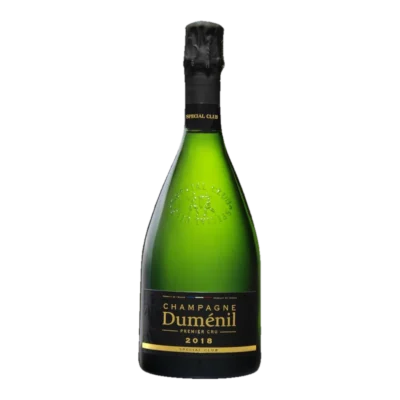
- 60% Pinot Noir, 40% Chardonnay, a vintage approved by the Club panel. At least 5 years on the lees.Serving: guinea fowl, veal with mushrooms, lobster.
- Millésime
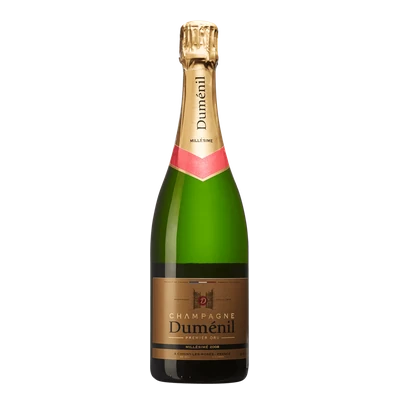
- 60% Chardonnay, 20% each of Pinot Noir and Meunier, made only in outstanding years, with at least 7 years in the cellar. The 2019 vintage is currently on sale.Serving: turbot, poultry with truffle, mature Comté.
Curiosities
- The village was once called Chigny-en-Montagne. By decrees of 1902 and 1903 President Émile Loubet renamed it Chigny-les-Roses in honour of the rose garden around the house of Louise Pommery, daughter of the famous Madame Pommery. source
- Roses used to be planted at the ends of vine rows as an early warning of disease: if the rose falls ill, the vineyard needs watching. source
- The house had its perpetual reserve, which has been in a vat since the 1996 harvest, tested for 189 substances. The analysis by a COFRAC-accredited laboratory resulted in a certificate of no pesticide residues. source
- In 1999 the vineyards of Chigny served as a testing ground for pheromone traps against grape moths. Since then Duménil has used no insecticides, and regards A. Paillot's 1931 book on pests of orchards and vineyards as its “bible”. source
- anecdote Frédérique's mother, Marie-Claude of the Janisson family, wrote a novel inspired by the life of her grandmother, who ran the vineyards on her own during the First World War. source
Chigny-les-Roses has had this name for centuries, because roses have always grown in the vineyards.
The name is recent: the village was renamed by decrees of 1902 and 1903 in honour of Louise Pommery's rose garden. Before that it was Chigny-en-Montagne, and in old documents Chaigny and Chigni. source
“For me, being an artisan winegrower is the most beautiful expression of creativity. It is a balancing act between character and elegance, between power and subtlety.”


Frequently asked questions
What is a perpetual reserve?
A reserve wine to which part of the young wine is added each year, while part is drawn off for the blend, so every vintage since the beginning lives on in the vat. At Duménil it started with the 1996 and 1997 vintages, and today the reserve covers the years 1996-2022. The house had it tested for 189 substances and received a certificate of no pesticide residues.
Which Duménil Champagne should you try first?
Réserve 27: equal parts Meunier, Pinot Noir and Chardonnay from Chigny, with the perpetual reserve, at least three years on the lees. Fruity yet fresh. For Meunier lovers there is Noirs de Montagne, for Chardonnay lovers Les Pêcherines.
Where does the name Chigny-les-Roses come from?
The village was called Chigny-en-Montagne and received its new name by decrees of 1902 and 1903 in honour of the rose garden of Louise Pommery, daughter of the famous Madame Pommery. Roses were also planted at the ends of the rows as an early warning of vine diseases.
What does Spécial Club on a bottle of Duménil mean?
A vintage Champagne approved by the Club Trésors de Champagne, an association of grower-producers founded in 1971. Duménil has belonged to the Club since 2011, and each of its vintages must pass two blind tastings before a panel. At Duménil it is 60% Pinot Noir and 40% Chardonnay, at least five years on the lees.
Who runs Champagne Duménil?
Frédérique Poret, who creates the blends herself, the fifth generation of the family, and her husband Hugues, who is responsible for the vineyards. They have 8.2 ha of premier cru in Chigny-les-Roses, Rilly-la-Montagne and Ludes: 35% Pinot Noir, 35% Meunier and 30% Chardonnay.
Other houses
All houses Moët & Chandonpronounced mo-ET ay shahn-DOHN50 bottles
 Dom Pérignonpronounced dom peh-ree-NYOHN27 bottles
 Bollingerpronounced boh-lan-ZHAY19 bottles
 Krugpronounced kroog13 bottles
 Charles Heidsieckpronounced sharl ED-sik10 bottles
 Veuve Clicquotpronounced vuhv klee-KOH11 bottles
- J-M Sélèquepronounced zhee em seh-LEK10 bottles
 Louis Roedererpronounced lwee ROH-duh-rer9 bottles
 Deutzpronounced duhts10 bottles
- Marguetpronounced mar-GAY10 bottles
 Lansonpronounced lahn-SOHN10 bottles
 Laurent-Perrierpronounced loh-RAHN peh-ree-AY8 bottles
Sources
- Champagne Duménil - house website (history, terroir, style, range)
- Champagne Duménil - Naturophile
- Champagne Duménil - Secrets de vigneron
- Champagne Duménil - the Chigny, Trilogie and Millésimes ranges
- Club Trésors de Champagne - Duménil member page
- Wikipedia FR - Chigny-les-Roses
- Guide Hachette des Vins - Champagne Duménil
Photos: ADT Marne, CC BY-SA 4.0 (Wikimedia Commons); Garitan, CC BY-SA 3.0 (Wikimedia Commons); Jean Weber, INRA DIST, CC BY 2.0 (Wikimedia Commons); unknown, public domain (Wikimedia Commons).


