


Henri Goutorbe
pronounced ahn-REE goo-TORBA family from Aÿ who started out with a vine nursery and still graft vine cuttings for other growers. Henri Goutorbe is one of the larger grower-producers in Champagne, with a piece of grand cru in Aÿ, its own red wine and a hotel a hundred metres from the cellars.
See the bottlesAvailable at SZAMPAN.com.pl
3 Champagnes. Formats and packaging of the same bottle are on its page, not listed separately.
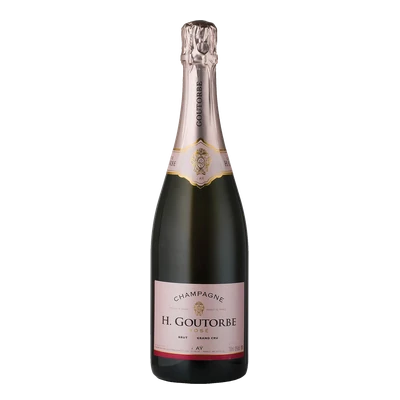


House signature
Vines for the neighbours
After phylloxera Émile Goutorbe began grafting vine cuttings, and the family still sells them to other growers today, in the fourth generation.
A large grower
The family farms 22 ha in nine communes, including approx. 6 ha of grand cru in Aÿ, and buys no grapes.
Red from Aÿ
Still Pinot Noir from Aÿ is bottled as Coteaux Champenois and goes into the house's rosé Champagne.
At a glance
- Founded
- vine nursery since approx. 1920; first bottles under Henri's name in the late 1940s.
- Based in
- Aÿ (Grand Cru), 9bis rue Jeanson
- Type
- grower (récoltant-manipulant) and vine nurseryman
- Owner
- the Goutorbe family
- President
- René Goutorbe (since 1970); the vineyards are run by his son Étienne
- Chef de cave
- René and Nicole Goutorbe are responsible for the cuvées; their son Bertrand helps with disgorgement
- Vineyards
- 22 ha in nine communes, including approx. 6 ha of grand cru in Aÿ; 70% Pinot Noir, 25% Chardonnay, 5% Meunier
- Production
- approx. 15,000 cases a year (approx. 180,000 bottles) according to the American importer Skurnik
- House style
- intense, vinous Pinot Noir from Aÿ; at least 3 years on the lees in the cellars beneath rue Jeanson
Data checked: October 2026.
History
- c. 1920
A nursery instead of a vineyard
After phylloxera the whole of Champagne had to be replanted with vines grafted onto resistant rootstocks. Émile Goutorbe, as Peter Liem writes, was then vineyard manager for Perrier-Jouët, and right after the First World War he founded a nursery. Business went so well that Émile bought his first plots around Aÿ with the proceeds.
- late 1940s.
Henri bottles
Émile's son, Henri (1922-2009), carried on running the nursery, but also began making and selling Champagne under his own name. The H. Goutorbe brand comes from him.
- 1970
René grows the house
In 1970 Henri's son René took over the estate with his wife Nicole. They bought more vineyards and enlarged and modernised the cellar. Today they have 22 ha, a lot for a grower who buys no grapes.
- 2004
A hotel on rue Jeanson
René and Nicole opened the three-star Castel Jeanson hotel in Aÿ, with 17 belle époque-style rooms, a hundred metres from the family cellars. So the Goutorbes came to cover the whole chain: from the vine cutting, through the Champagne, to a bed for guests.
- today
The fourth generation
René's sons, Bertrand (born 1983) and Étienne (born 1985), are developing the house: Bertrand helps with disgorgement, Étienne runs the vineyards and the nursery, and the estate has received HVE certification. Their sister Elisabeth founded her own house with her husband, Champagne Egrot et Filles.

People
Émile Goutorbe
Vineyard manager at Perrier-Jouët who after the First World War began grafting cuttings onto phylloxera-resistant rootstocks. The house gives his dates as 1890-1956 (elsewhere as 1860-1956).
Henri Goutorbe
A nurseryman who began bottling his own Champagne. The house bears his name.
René Goutorbe
Known in the family as “René l'efficace”, René the Efficient; he brought the nickname back from one of his travels. It was he who built the house to its present scale.
Nicole Goutorbe
On the house website “l'inspiratrice”, the one who inspires. Together with René she creates the cuvées, and she founded the Castel Jeanson hotel.
Étienne Goutorbe
He is responsible for the vineyards and the nursery, and took the estate through HVE certification.
House style
The most valuable are the approx. 6 ha of grand cru in Aÿ, on steep, sunny slopes above the town. The rest of the vineyards lie in the premier cru villages of Mareuil-sur-Aÿ, Mutigny, Bisseuil, Avenay-Val-d'Or, Cumières and Hautvillers, as well as in Sézanne (Marne) and Gyé-sur-Seine (Aube). Pinot Noir dominates, and in Aÿ it gives full, velvety wines with a pure aroma.
The grapes are picked by hand, each plot is vinified separately in steel, and the blends are assembled in March. The bottles spend at least 3 years on the lees in the cellars beneath rue Jeanson, dug between the 17th and 21st centuries. Tom Stevenson describes the house's Champagnes as rich and well built, and rates its Spécial Club above the rest.
Key cuvées
- Cuvée Tradition Brut
- 70% Pinot Noir, 25% Chardonnay, 5% Meunier. The simplest lesson in the house style.Serving: as an aperitif, with roast chicken, pâté and Comté.
- Prestige Premier Cru
- 75% Pinot Noir, 25% Chardonnay from the premier cru villages around Aÿ.Serving: duck, veal, mushroom risotto.
- Blanc de Noirs Grand Cru
- 100% Pinot Noir from Aÿ, in an Extra Brut version. Most recently from the 2016 vintage.Serving: beef tartare, pigeon, Iberian ham.
- Spécial Club Grand Cru
- 70% Pinot Noir, 30% Chardonnay from Aÿ. The house's most highly regarded wine, most recently from the 2015 and 2018 vintages.Serving: lobster, guinea fowl with morels, mature Comté.
- Collection René
- A grand cru vintage named after the current owner.Serving: turbot, poultry with truffle, aged Parmesan.
- Aÿ Rouge
- A still red Coteaux Champenois from 100% Pinot Noir from Aÿ. It is also added to the house's rosé.Serving: lightly chilled with duck, charcuterie and cheeses from Champagne.
Curiosities
- The Goutorbes still sell vine cuttings to other growers. According to the family, the nursery is “the first link in the chain” of the winegrower's craft, and it is now in its fourth generation. source
- The founder of the nursery, Émile Goutorbe, was vineyard manager for Perrier-Jouët. With the money earned from vine cuttings he bought the family's first plots. source
- The house's cellars beneath rue Jeanson were dug between the 17th and 21st centuries. They can be visited by groups of up to 50 people, in French, English and German. source
- In April 1911 Aÿ was the centre of the winegrowers' revolt against the négociants, who were buying cheap wines from outside Champagne. The rebel growers looted and burned warehouses, and troops were stationed in the vineyards. source
- René's daughter, Elisabeth, did not stay in the family house: with her husband she founded her own brand, Champagne Egrot et Filles. source
- Richard Juhlin points out that the wine of Aÿ was famous long before sparkling Champagne, and kings and popes ordered “vin d'Aÿ”. source
- The house also has the Percussion Premier Cru cuvée, the only one in the range aged in wood. source
Henri Goutorbe is 100% grand cru, because the house is in Aÿ.
Only part of the vineyards is grand cru: approx. 6 ha in Aÿ. The rest lies in the premier cru villages around Aÿ, and some as far away as Sézanne (Marne) and Gyé-sur-Seine (Aube). That is why, alongside grand cru, the labels also include premier cru and unclassified cuvées. source
“Goutorbe's Spécial Club Grand Cru is in a different class altogether.”
Frequently asked questions
Is Henri Goutorbe entirely grand cru?
No. The grand cru is approx. 6 ha in Aÿ; the rest lies in the premier cru villages around Aÿ, and some as far away as Sézanne (Marne) and Gyé-sur-Seine (Aube). That is why, alongside grand cru, the labels also include premier cru and unclassified cuvées.
Which Goutorbe Champagne should you try first?
Cuvée Tradition Brut: 70% Pinot Noir, 25% Chardonnay and 5% Meunier, the simplest lesson in the house style. Pinot Noir from Aÿ gives full, velvety wines with a pure aroma. All bottles spend at least three years on the lees.
What is Goutorbe Spécial Club?
A vintage Champagne from grand cru Aÿ, 70% Pinot Noir and 30% Chardonnay, approved by the Club Trésors de Champagne. It is the house's most highly regarded wine: Tom Stevenson wrote that it is “in a different class altogether”. Most recently from the 2015 and 2018 vintages.
Can you visit the Goutorbe cellars in Aÿ?
Yes, the cellars beneath rue Jeanson, dug between the 17th and 21st centuries, are open to groups of up to 50 people, with a guide in French, English and German. A hundred metres away the family runs the three-star Castel Jeanson hotel with 17 rooms.
Why do the Goutorbes sell vine cuttings?
Because that is how they started. After phylloxera the whole of Champagne had to be replanted with vines grafted onto resistant rootstocks, and Émile Goutorbe, vineyard manager for Perrier-Jouët, founded a nursery and used the money he earned to buy the first plots. The family calls the nursery “the first link in the chain”.
Other houses
All houses Moët & Chandonpronounced mo-ET ay shahn-DOHN50 bottles
 Dom Pérignonpronounced dom peh-ree-NYOHN27 bottles
 Bollingerpronounced boh-lan-ZHAY19 bottles
 Krugpronounced kroog13 bottles
 Charles Heidsieckpronounced sharl ED-sik10 bottles
 Veuve Clicquotpronounced vuhv klee-KOH11 bottles
- Marguetpronounced mar-GAY10 bottles
- J-M Sélèquepronounced zhee em seh-LEK10 bottles
 Louis Roedererpronounced lwee ROH-duh-rer9 bottles
 Lansonpronounced lahn-SOHN10 bottles
 Deutzpronounced duhts10 bottles
 Laurent-Perrierpronounced loh-RAHN peh-ree-AY8 bottles
Sources
- Champagne H. Goutorbe - Maison
- Champagne H. Goutorbe - Famille
- Champagne H. Goutorbe - Vignoble and the nursery
- Champagne H. Goutorbe - Nos cuvées
- Club Trésors de Champagne - Henri Goutorbe member page
- Skurnik Wines - Goutorbe profile (quotes: Peter Liem, Tom Stevenson, Richard Juhlin)
- Wikipedia FR - Révolte des vignerons de la Champagne en 1911
- Guide Hachette des Vins - Champagne Goutorbe
Photos: Pline, CC BY-SA 3.0 (Wikimedia Commons); Agence Rol, public domain (Wikimedia Commons).


